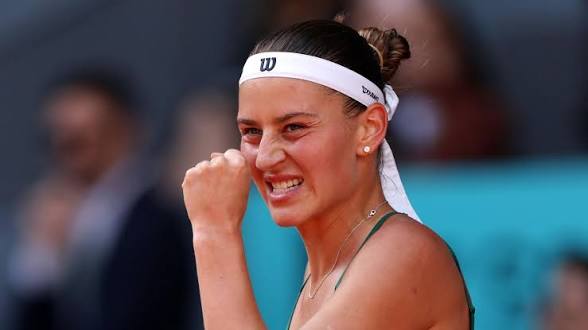
Marta Kostyuk: Mirra Andreeva, Tennis, Husband, Madrid Open Win

Marta Kostyuk delivered the biggest moment of her career by defeating Mirra Andreeva in the 2026 Madrid Open final. The Ukrainian star won 6-3, 7-5 to capture her maiden WTA 1000 crown, a breakthrough that instantly elevated her status in women’s tennis. The victory was more than a title—it was a statement that Kostyuk has become one of the most dangerous clay-court players heading toward the next phase of the season.
For tennis fans, this result was compelling for several reasons. First, Andreeva entered the final as one of the hottest young players on tour. Second, Kostyuk handled the occasion with remarkable composure. Finally, the triumph underlined the consistency she has shown during the European clay swing.
Madrid Open win over Mirra Andreeva changed the conversation
The final against Andreeva was not simply another title match. It represented a clash between two of the most intriguing young talents in the women’s game.
Kostyuk started aggressively. She dictated play early, using depth off both wings and attacking Andreeva’s second serve. Her movement on clay looked especially sharp, allowing her to turn defense into offense. She grabbed control of the opening set and took it 6-3.
The second set was more complicated. Andreeva briefly seized momentum and threatened to push the match into a decider. However, Kostyuk stayed composed under pressure. She saved a set point, responded with clutch serving, and closed out the match in straight sets.
That ability to manage tension was perhaps the most significant takeaway. In previous seasons, Kostyuk’s talent had never been in doubt. What observers sometimes questioned was her week-to-week emotional control in big moments. In Madrid, she answered that question emphatically.
Her on-court backflip celebration immediately became one of the most memorable images of the tournament. It captured both relief and joy—an athlete recognizing a career-defining breakthrough.
Why beating Mirra Andreeva matters
Mirra Andreeva has already built a reputation as one of the most tactically mature teenagers in the sport. Her ability to absorb pace, change direction, and compete fearlessly has made her one of the most difficult young opponents on the WTA Tour.
That context makes Kostyuk’s win even more impressive.
This was not a fortunate draw or a lucky week. It was a victory over a player widely viewed as a future major contender. By beating Andreeva in straight sets, Kostyuk showed she can impose her game against elite opposition.
The win also demonstrated the evolution of her clay-court tennis. Her forehand carried more authority than in earlier stages of her career, while her court positioning looked more proactive. Instead of waiting for mistakes, she created pressure.
For analysts, that shift matters because it suggests her Madrid title may not be a one-off result.
Marta Kostyuk tennis journey
Marta Kostyuk has long been regarded as one of the brightest talents in Ukrainian tennis.
Born in Kyiv, she gained international attention as a teenager when she made a stunning run at the 2018 Australian Open. Even then, her athleticism and shot-making stood out. However, translating promise into consistent top-level results took time.
Like many young players, Kostyuk faced the difficult transition from junior prodigy to established professional. There were flashes of brilliance, but there were also stretches of inconsistency.
Over the past two seasons, that has begun to change.
She has become physically stronger, tactically sharper, and emotionally more composed. Her quarterfinal run at the 2024 Australian Open hinted that a deeper breakthrough was coming. Now, her Madrid triumph feels like confirmation rather than surprise.
What the Madrid title means for her ranking and reputation
Winning a WTA 1000 title dramatically alters perception.
Before Madrid, Kostyuk was respected as a dangerous player capable of upsetting top seeds. After Madrid, she is now viewed as a legitimate contender in major tournaments.
Reports following the tournament indicated the win would lift her to a career-high ranking zone. That matters because ranking affects seeding, and seeding affects draws. A higher position can significantly improve a player’s chances of making deep runs at Grand Slams and other big events.
Just as important, the title changes psychology.
Opponents no longer see Kostyuk as merely talented. They now see a player who has proven she can win one of the biggest events outside the Grand Slams.
That shift often matters as much as the ranking points.
Marta Kostyuk’s playing style
One reason fans increasingly enjoy watching Marta Kostyuk is the completeness of her game.
Aggressive baseline tennis
Kostyuk likes to take time away from opponents. Her forehand can flatten out quickly, and when she steps inside the baseline, she can dictate rallies.
Excellent movement
Clay rewards movement and balance. In Madrid, Kostyuk showed elite court coverage, especially when changing direction.
Improved point construction
Earlier in her career, she sometimes overplayed aggressive patterns. Now she mixes patience with attack more effectively.
Competitive toughness
This was perhaps the most noticeable improvement during the Madrid run. She handled momentum swings with far greater maturity than in previous years.
These qualities make her especially dangerous on slower surfaces, though they also translate well to hard courts.
Marta Kostyuk husband: who is he?
One of the most searched questions around Marta Kostyuk concerns her personal life.
Marta Kostyuk is married to George Kyzymenko. Reports indicate the couple married in 2023, and he has frequently been seen supporting her during major tournaments. Several recent reports around the Madrid Open again referenced his presence in her player box.
Although Kostyuk generally keeps much of her private life away from the spotlight, fans often notice the stability and support that family can bring to elite athletes during demanding stretches of the season.
For many players, emotional grounding away from the court matters enormously. While tennis remains an individual sport, strong personal support systems often help sustain consistency at the highest level.
Why this Madrid Open win feels bigger than one trophy
There are titles, and then there are breakthrough titles.
The Madrid Open belongs in the second category.
Winning a WTA 1000 event means navigating a field stacked with elite players over a demanding week. It tests not just talent but recovery, focus, adaptability, and nerve.
For Kostyuk, the victory feels especially significant because it came during a stretch of excellent clay-court form. Reports noted that she entered Madrid already carrying momentum from a title in Rouen, and the Madrid run extended her clay winning streak.
Momentum like that can reshape an entire season.
Instead of entering the next major event as a dangerous outsider, Kostyuk now enters as one of the names rivals will actively want to avoid.
Can Marta Kostyuk win a Grand Slam?
That question now feels far more realistic than it did a few weeks ago.
A Grand Slam title requires seven high-pressure wins against elite competition. Kostyuk’s Madrid run does not prove she will do that. But it does prove she has the tools.
She now has:
- top-tier athleticism
- improved tactical maturity
- confidence from a major title
- evidence she can beat elite young contenders on big stages
The next challenge is sustaining that level over multiple tournaments.
That is where true top-10 players separate themselves.
If Kostyuk continues serving efficiently, maintaining forehand depth, and managing emotional swings, she absolutely has the game to make deep Slam runs.
What this means for Mirra Andreeva
Even in defeat, Mirra Andreeva remains one of the brightest prospects in women’s tennis.
Losing a final at a WTA 1000 event at such a young age is hardly a setback in the long-term picture. In fact, reaching the final further confirms her rapid development.
Andreeva’s tactical intelligence and competitive maturity remain exceptional for her age.
This rivalry could become one of the more compelling young matchups on tour in the coming years.
That possibility is one reason the Madrid final attracted so much attention. It felt like more than a title match—it felt like a glimpse of the future of women’s tennis.
What comes next for Marta Kostyuk?
The immediate question is whether she can carry this level into the next major tournaments.
That is often the hardest step after a breakthrough.
Players suddenly face different expectations. Media attention increases. Opponents prepare more carefully. Every match feels slightly heavier.
Still, Kostyuk appears better equipped than ever to handle that challenge.
Her Madrid performance suggested not just peak form, but sustainable growth.
If she continues playing this way, she will no longer be discussed merely as a rising player.
She will be discussed as one of the established threats on the WTA Tour.
Final thoughts
Marta Kostyuk did more than win the 2026 Madrid Open.
She announced herself at a different level.
By beating Mirra Andreeva in straight sets, she captured the biggest title of her career and delivered one of the defining performances of the clay season.
Her aggressive tennis, improved composure, and growing consistency all suggest this may be the beginning of something larger rather than the peak itself.
For tennis fans, that is what makes this story so compelling.
Madrid may ultimately be remembered not simply as the tournament Kostyuk won—but as the moment her career changed.
FAQs
Who did Marta Kostyuk beat in the Madrid Open final?
Marta Kostyuk defeated Mirra Andreeva 6-3, 7-5 in the 2026 Madrid Open final.
Is the Madrid Open Marta Kostyuk’s biggest title?
Yes. The 2026 Madrid Open gave her the first WTA 1000 title of her career.
Who is Marta Kostyuk’s husband?
Marta Kostyuk is married to George Kyzymenko. Reports note they married in 2023.
Why is the win over Mirra Andreeva important?
Because Mirra Andreeva is considered one of the brightest young talents in women’s tennis, making the victory especially significant.
Can Marta Kostyuk win a Grand Slam?
Her Madrid form suggests she has the level to challenge deep into majors, especially if she maintains the consistency shown during the clay season.