Alex Zanardi: Cause of Death, Crash, F1 Career, Accident, and the 2001 Crash Explained

The story of Alex Zanardi is one of the most powerful in modern motorsport. For many fans, his name is linked not only to speed and skill but also to resilience, courage, and an extraordinary comeback. In recent days, interest in Alex Zanardi cause of death, his historic 2001 crash, and his journey through Formula 1 has surged after confirmation that the former racing driver and Paralympic champion died at the age of 59 on May 1, 2026.
Although the family announced that Zanardi passed away peacefully surrounded by loved ones, they did not publicly specify an official medical cause of death. However, multiple recent reports note that his health had remained deeply affected by the catastrophic handbike accident he suffered in 2020, years after surviving his life-changing 2001 racing crash.
For motorsport followers, Zanardi’s legacy reaches far beyond tragedy. He was a gifted driver, a fierce competitor, and later a Paralympic icon who redefined what recovery and determination could look like.
Who Was Alex Zanardi?
Born Alessandro Zanardi in Bologna, Italy, in 1966, Zanardi emerged as one of the most charismatic racers of his generation. Before becoming a symbol of perseverance, he first made his name as an ambitious young driver in European motorsport.
He entered Formula 1 in 1991 and competed across several seasons in the 1990s. During his F1 career, Zanardi drove for teams including Jordan Grand Prix, Lotus Cars, Minardi, and Williams Grand Prix Engineering. Across 41 Grands Prix, his best finish came with sixth place at the 1993 Brazilian Grand Prix.
Although his Formula 1 results never fully reflected his talent, Zanardi found his greatest racing success in American open-wheel competition. He became a superstar in CART, winning back-to-back championships in 1997 and 1998, a period that cemented his reputation as one of the world’s elite drivers.
Alex Zanardi Cause of Death
One of the most searched questions today is simple: What was Alex Zanardi’s cause of death?
As of the latest family statement, no formal medical cause of death has been released publicly. The family said only that Zanardi died peacefully on May 1, 2026.
However, major reporting has connected his passing to the severe long-term consequences of the devastating handbike crash he suffered in 2020. During that accident in Tuscany, Zanardi collided with a truck during a relay event and sustained major cranial and facial injuries that required prolonged treatment and rehabilitation. Those injuries dramatically altered the final years of his life.
That means while there has been no official single-line cause released, the broader context strongly points to the prolonged physical aftermath of the 2020 accident.
The 2001 Alex Zanardi Crash That Changed Everything
If there is one moment forever attached to Zanardi’s name, it is the 2001 crash at the Lausitzring.
On September 15, 2001, during a CART race at the Lausitzring in Germany, Zanardi exited the pits and accelerated back onto the track. Within seconds, his car spun and was struck violently at high speed by another competitor.
The impact was catastrophic.
The crash nearly killed him. Doctors fought for hours to save his life. Zanardi suffered massive blood loss, and both of his legs had to be amputated—one above the knee and the other at the hip. It was one of the most shocking accidents in modern racing history.
At that point, many believed his sporting career was over.
They were wrong.
How Alex Zanardi Survived the 2001 Accident
The reason the 2001 crash remains so widely discussed is not only because of how violent it was, but because Zanardi somehow survived it.
He underwent multiple surgeries and a long rehabilitation process. Reports from the period describe him as critically injured, yet determined almost immediately to reclaim his life. Years later, people still cite his early response after the accident as an example of extraordinary mindset.
Instead of retreating from sport, Zanardi adapted.
He embraced specially designed hand controls, rebuilt his physical strength, and returned to competitive racing less than two years after losing both legs. That alone would have been historic.
But he did even more.
Alex Zanardi’s Return to Racing After the Crash
In 2003, Zanardi made a symbolic and emotional return to the same German circuit where the crash happened. It was one of the most remarkable comeback moments in motorsport.
Soon afterward, he competed again in touring car racing, driving specially modified vehicles using hand controls for throttle and braking. His comeback wasn’t ceremonial. He raced seriously and competitively.
For many fans, this phase of his career transformed him from a talented racer into something bigger—a sporting figure whose determination transcended results.
Alex Zanardi and Formula 1
Search interest around Alex Zanardi F1 has surged because newer fans often know him primarily as a Paralympian.
Before all of that, he was very much part of the Formula 1 world.
Zanardi’s F1 debut came in 1991. While he never became a championship contender, he raced during a competitive era and shared the grid with some of the sport’s best-known names.
His most notable Formula 1 stretch came with Team Lotus in 1993 and 1994. Later, he returned with Williams Grand Prix Engineering in 1999 after his success in CART. That second stint, however, did not go as hoped.
Even so, Zanardi remained respected inside the paddock. Following his death, figures across Formula 1 paid tribute to him not only for his racing but also for the way he handled unimaginable adversity.
Reinvention as a Paralympic Champion
What makes Zanardi unique is that the second act of his career may have been even more extraordinary than the first.
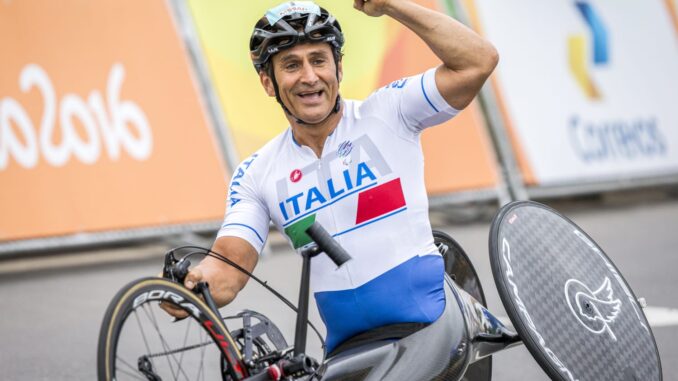
After his racing comeback, he shifted toward para-cycling. There, he became one of the most decorated athletes in the sport.
At the 2012 Summer Paralympics and the 2016 Summer Paralympics, Zanardi won four gold medals and two silver medals. He also collected multiple world championship titles.
For many younger fans, this is how they first came to know him—not as a former F1 driver, but as one of the most inspiring Paralympians in the world.
That second career elevated him from sports star to global symbol of resilience.
The 2020 Accident
Another major turning point came in 2020.
During a charity relay handbike event in Tuscany, Zanardi lost control and collided with an oncoming truck. The impact caused severe neurological, cranial, and facial injuries. He required multiple operations and spent a long period in hospital and rehabilitation.
Unlike the 2001 crash, this accident happened later in life and proved far more difficult to recover from publicly.
His family kept much of his medical condition private in the years that followed. Therefore, when news of his death arrived in 2026, many immediately connected it to the long-lasting effects of the 2020 crash.
Why Alex Zanardi Still Matters
Many athletes are remembered for championships.
Zanardi is remembered for something larger.
He won races. He won titles. He reached Formula 1. Yet what truly made him unforgettable was the way he responded after catastrophe.
He survived one of the worst crashes in racing history.
He lost both legs.
He came back.
Then he became a Paralympic champion.
That sequence explains why tributes have come not only from motorsport but from the wider sporting world. Even today, fans across communities continue to describe him as one of the most inspirational athletes they have ever seen.
Alex Zanardi’s Legacy
When people search Alex Zanardi crash 2001, Alex Zanardi accident, or Alex Zanardi cause of death, they are often looking for the facts.
The facts matter.
But the bigger story matters more.
Zanardi’s life was not defined by the crash at the Lausitzring. It was defined by everything he did afterward.
His legacy sits at the intersection of motorsport, disability sport, and human resilience.
For Formula 1 fans, he remains a respected former driver.
For Paralympic fans, he remains a champion.
For sports fans everywhere, he remains proof that greatness is not always measured by trophies alone.
Final Thoughts
The death of Alex Zanardi at age 59 closes one of the most remarkable chapters in modern sports history.
Although no official medical cause of death has been publicly specified, the long-term consequences of the 2020 handbike accident form the essential context.
Still, when history remembers Zanardi, it will not begin with death.
It will begin with courage.
It will remember the 2001 crash.
It will remember the comeback.
And above all, it will remember a man who refused to let tragedy define the limits of his life.
FAQs About Alex Zanardi
What was Alex Zanardi’s cause of death?
His family confirmed that he died on May 1, 2026, but did not publicly specify an official medical cause of death. Reports note that he had been living with severe long-term consequences from the 2020 handbike accident.
What happened in Alex Zanardi’s 2001 crash?
During a CART race at the Lausitzring in Germany, Zanardi’s car spun after leaving the pits and was struck at high speed. The accident nearly killed him and led to the amputation of both legs.
Did Alex Zanardi race in Formula 1?
Yes. Zanardi competed in 41 Formula 1 Grands Prix during the 1990s and drove for teams including Jordan Grand Prix, Lotus Cars, Minardi, and Williams Grand Prix Engineering.
Did Alex Zanardi return to racing after losing his legs?
Yes. He returned to competitive racing using specially adapted hand controls and later became a highly successful Paralympic handcyclist.
How many Paralympic gold medals did Alex Zanardi win?
He won four gold medals and two silver medals across the 2012 Summer Paralympics and the 2016 Summer Paralympics.