Introduction
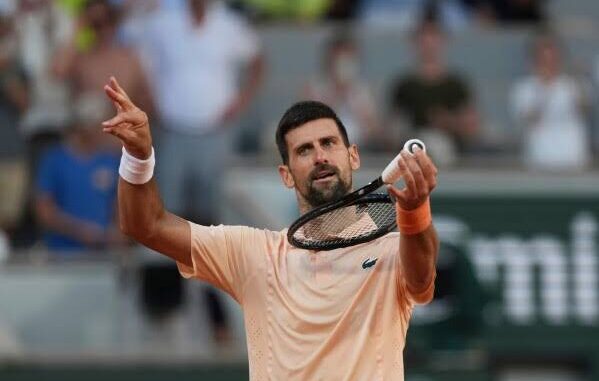
Few athletes in tennis history command attention quite like Novak Djokovic. Every time the Serbian superstar steps onto the clay courts of Roland Garros, expectations rise, records are discussed, and history becomes part of the conversation. In the 2026 French Open, Djokovic once again entered Paris carrying the hopes of millions of fans while chasing another Grand Slam milestone.
The 39-year-old legend has already cemented his place among the greatest tennis players ever, but Roland Garros continues to test even the most accomplished champions. This year’s tournament has been defined by brutal Paris heat, emotionally charged crowds, and physically exhausting matches. Djokovic has found himself at the center of all three storylines.
The French Open, officially known as French Open and played at Roland Garros Stadium, is the only Grand Slam held on clay courts. The slow surface demands endurance, tactical intelligence, and mental toughness. Djokovic has mastered all of those qualities throughout his career, but the 2026 edition presents unique challenges.
Djokovic’s Strong Start at Roland Garros
Novak Djokovic opened his campaign with a hard-fought victory against French player Giovanni Mpetshi Perricard. The Serbian star lost the first set before recovering to win in four sets, showing the resilience that has defined his legendary career.
The opening-round contest highlighted several key themes:
- Djokovic’s elite stamina despite being 39 years old
- His ability to adapt during long clay-court rallies
- His unmatched mental composure under pressure
- The influence of a passionate Paris crowd supporting local players
The atmosphere on Court Philippe-Chatrier was intense from the beginning. French fans loudly supported Perricard, hoping for a major upset. However, Djokovic slowly took control with deeper returns, better movement, and tactical patience.
After the match, Djokovic described the performance as “just what the doctor ordered,” signaling confidence in his form despite limited clay-court preparation earlier in the season.
The Paris Heat Becomes a Major Story
One of the biggest talking points at the 2026 French Open has been the extreme weather conditions in Paris. Temperatures exceeded 30°C throughout the opening week, creating difficult playing conditions for athletes and spectators alike.
Djokovic openly discussed the issue and questioned why stronger heat policies were not implemented during the tournament. Reports from Roland Garros showed players struggling physically in the blazing sun, with some experiencing dizziness, cramps, and exhaustion.
The Serbian veteran suggested scheduling more matches later in the evening to protect player health. His comments gained attention after Czech star Jakub Mensik collapsed following a marathon match in the Paris heat.
Djokovic’s concerns reflected a broader issue in modern tennis. With climate conditions becoming more extreme, Grand Slam tournaments are increasingly forced to balance television schedules, ticket sales, and athlete safety.
Why Clay Courts Challenge Even the Greatest Players
Clay is widely considered the most physically demanding surface in tennis. Unlike grass or hard courts, clay slows the ball down and produces longer rallies. Players are forced to slide into shots, recover repeatedly, and maintain concentration over extended points.
For Djokovic, however, clay has become one of his most successful surfaces. Although many fans associate Roland Garros with Rafael Nadal, Djokovic has built a remarkable legacy in Paris as well.
His achievements at the French Open include:
- Multiple Roland Garros titles
- More than 100 career wins in Paris
- Record-breaking Grand Slam appearances
- Numerous semifinal and final appearances
Djokovic’s movement on clay remains elite. Even at 39, he continues to defend corners effectively and redirect pace with extraordinary precision.
Djokovic and the Roland Garros Crowd
Another major storyline during the 2026 tournament has been Djokovic’s tense relationship with sections of the Paris crowd. During one match, he reacted visibly to boos and interruptions from spectators supporting his opponent.
Crowd reactions toward Djokovic have long been a fascinating aspect of his career. While he is respected globally for his achievements, he has often played in environments where fans favored Roger Federer, Rafael Nadal, or local competitors.
At Roland Garros, that atmosphere can become especially emotional because French fans passionately support home players. Djokovic handled the situation professionally but made it clear afterward that he felt some crowd behavior crossed the line.
Despite the tension, his ability to thrive in hostile environments remains one of his greatest competitive strengths.
Chasing More Grand Slam History
Every Grand Slam appearance by Djokovic now carries historical importance. The Serbian legend continues to add records to an already unmatched résumé.
At the 2026 French Open, he entered his 82nd Grand Slam tournament appearance, extending his all-time record.
Djokovic’s pursuit of additional major titles has become one of tennis’s defining stories. He already owns one of the greatest collections of achievements in sports history, including:
- Multiple Australian Open titles
- Wimbledon championships
- US Open victories
- French Open crowns
- Olympic success
- ATP Finals titles
- Weeks ranked world No. 1
Winning another Roland Garros title at age 39 would further strengthen his argument as the greatest tennis player of all time.
The Evolution of Djokovic’s Playing Style
One reason Djokovic remains competitive at an advanced stage of his career is his ability to evolve.
Earlier in his career, he relied heavily on athletic defense and endless baseline rallies. While those skills still exist, modern Djokovic uses smarter point construction and selective aggression.
At Roland Garros 2026, several tactical patterns stood out:
Improved Serve Placement
Djokovic used wide serves effectively to open the court and shorten rallies, an important adjustment in extreme heat conditions.
Efficient Movement
Instead of chasing every ball with maximum intensity, he conserved energy strategically during longer matches.
Mental Pressure
Djokovic continues to dominate crucial moments. Break points, tiebreakers, and long rallies often swing in his favor because of his composure.
Tactical Variety
Drop shots, angles, and changes in pace have become increasingly important parts of his clay-court strategy.
The Physical Demands of the Paris Heat Match
The “Paris heat match” narrative surrounding Djokovic became one of the tournament’s biggest talking points. With temperatures soaring, every match required exceptional hydration, conditioning, and recovery.
Players repeatedly mentioned the difficulty of competing under direct sunlight on clay courts. The red clay absorbs heat, making conditions even more exhausting.
Djokovic’s fitness routines and recovery methods have long been admired within tennis circles. His strict nutrition plan, stretching routines, and recovery discipline help explain why he remains competitive against players over a decade younger.
In Paris, those habits once again proved essential.
Roland Garros and Djokovic’s Legacy
Djokovic’s relationship with Roland Garros is deeply emotional. For years, the tournament represented the missing piece in his Grand Slam collection before he finally won the title in 2016.
That breakthrough victory completed a historic Career Grand Slam and placed him among tennis immortals.
Since then, every return to Paris has added another chapter to his legacy. Unlike earlier years when Nadal dominated the tournament, Djokovic now enters Roland Garros as one of the elder statesmen of tennis.
Fans understand they are witnessing the final years of one of the sport’s greatest careers.
The Competition at the 2026 French Open
The men’s draw in Paris remains highly competitive. Younger stars continue pushing for dominance while experienced champions fight to stay relevant.
Players such as Jannik Sinner, Carlos Alcaraz, and rising talents like João Fonseca have brought fresh energy to the tournament.
However, Djokovic’s experience in five-set matches still gives him a major advantage. Few players understand momentum shifts, pressure moments, and Grand Slam endurance better than the Serbian icon.
Even younger opponents often struggle mentally against him over long matches.
Djokovic’s Mental Strength Separates Him
Perhaps Djokovic’s greatest quality is psychological resilience.
Throughout his career, he has:
- Recovered from deficits
- Won marathon matches
- Silenced hostile crowds
- Overcome injuries
- Thrived under pressure
At Roland Garros 2026, those qualities remain visible. Whether battling the Paris heat, difficult opponents, or emotional crowd environments, Djokovic continues to find solutions.
His focus during critical points remains extraordinary. That mental edge often decides Grand Slam matches.
What Comes Next for Djokovic in Paris?
As the tournament progresses, questions continue to surround Djokovic’s title chances.
Can he physically handle two weeks of clay-court battles in extreme heat? Can younger stars overpower him physically? Or will his experience and tactical intelligence once again lead him deep into the tournament?
Regardless of the final result, Djokovic’s presence at Roland Garros remains one of the defining stories of tennis.
Every match feels historic because fans know opportunities to watch him compete at Grand Slam level may soon become limited.
Conclusion
The 2026 French Open has already delivered drama, heat, controversy, and unforgettable tennis. At the center of it all stands Novak Djokovic — still fighting, still competing, and still chasing greatness.
From battling through difficult opening matches to speaking out about dangerous heat conditions in Paris, Djokovic continues to shape the narrative at Roland Garros. His determination, resilience, and unmatched experience have allowed him to remain a serious contender even at 39 years old.
Whether he wins another French Open title or not, Djokovic’s impact on Roland Garros is permanent. He has transformed himself from challenger to champion and from rival to living legend.
As Paris continues to heat up, so does the pursuit of history.