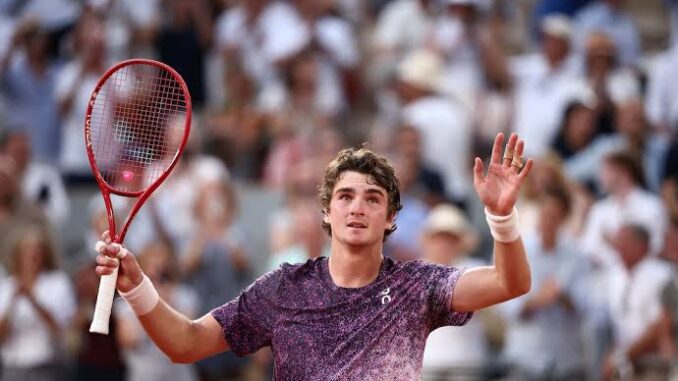
Joao Fonseca: French Open, Tennis, vs Ruud, Roland Garros, Age
Brazilian tennis sensation Joao Fonseca has rapidly become one of the most exciting young players on the ATP Tour. At just 19 years old, Fonseca has emerged as a major force in men’s tennis, captivating fans with his powerful baseline game, fearless mentality, and impressive performances on the biggest stages.
His remarkable run at the 2026 French Open has elevated his profile even further. After defeating former world No. 1 Novak Djokovic and then overcoming two-time Roland Garros finalist Casper Ruud, Fonseca announced himself as one of the brightest stars of tennis’ next generation.
In this article, we examine Joao Fonseca’s French Open campaign, his age, tennis career, Roland Garros achievements, his memorable match against Casper Ruud, and what the future may hold for the Brazilian prodigy.
Who Is Joao Fonseca?
Joao Fonseca is a Brazilian professional tennis player born on August 21, 2006, in Rio de Janeiro, Brazil. Despite his young age, he has already established himself as one of the most promising talents in men’s tennis. He plays right-handed and possesses a powerful all-court game that combines aggressive baseline hitting with impressive athleticism.
Tennis experts have compared Fonseca’s rise to that of several modern stars because of his ability to compete against experienced ATP veterans while still in his teenage years.
His breakthrough began in junior tennis, where he quickly gained recognition for his explosive forehand and mental toughness. As he transitioned into professional tournaments, he continued to impress with victories over higher-ranked opponents.
Joao Fonseca Age: How Old Is He?
One of the most remarkable aspects of Fonseca’s success is his age.
Born on August 21, 2006, Joao Fonseca is currently 19 years old. Despite being a teenager, he has already achieved milestones that many players spend years chasing.
At an age when many players are still competing primarily in junior tournaments, Fonseca has already:
- Won ATP-level matches.
- Entered the ATP Top 50.
- Defeated Grand Slam champions.
- Reached the quarterfinals of a Grand Slam tournament.
- Become one of Brazil’s biggest sporting stars.
His age makes his achievements even more impressive, especially considering the physical and mental demands of professional tennis.
Joao Fonseca’s Rise in Professional Tennis
Fonseca’s rise through the tennis rankings has been incredibly rapid.
During 2025, he established himself as one of the ATP Tour’s fastest-rising players. He secured ATP titles, climbed into the world’s top rankings, and consistently challenged elite opponents.
His game is built around:
Powerful Forehand
Fonseca’s forehand is considered one of his biggest weapons. He generates tremendous pace and can dictate rallies from both sides of the court.
Aggressive Mentality
Unlike many young players who play cautiously against established stars, Fonseca attacks from the outset. This fearless approach has allowed him to upset top-ranked opponents.
Physical Strength
Despite his young age, Fonseca has developed impressive physical conditioning. His endurance was evident during several long five-set matches at Roland Garros.
Mental Toughness
Perhaps his greatest strength is his mindset. Fonseca has repeatedly shown the ability to recover from difficult situations and perform under pressure.
Joao Fonseca at the French Open
The French Open, officially known as Roland Garros, has been the tournament that truly introduced Joao Fonseca to a global audience.
Clay courts traditionally reward patience, consistency, and tactical intelligence. Many young power hitters struggle to adapt to the surface.
Fonseca, however, has demonstrated remarkable maturity on clay.
His 2026 French Open campaign included victories over several experienced opponents and culminated in a historic run to the quarterfinals.
Key achievements from his tournament include:
- First Grand Slam quarterfinal appearance.
- Defeating Novak Djokovic.
- Beating Casper Ruud.
- Becoming the first Brazilian man since Gustavo Kuerten to reach the Roland Garros quarterfinals.
These accomplishments have positioned him among the leading young stars of world tennis.
Roland Garros Success and Brazilian Tennis Legacy
Brazil has a proud tennis history, largely thanks to Gustavo Kuerten.
Kuerten won Roland Garros three times and remains one of the most beloved figures in tennis history.
For years, Brazil searched for a player capable of following in Kuerten’s footsteps.
Joao Fonseca appears to be that player.
His quarterfinal appearance marked the deepest run by a Brazilian man at Roland Garros since Kuerten achieved the feat more than two decades ago.
The achievement generated enormous excitement among Brazilian fans and media.
Many analysts now view Fonseca as the future face of Brazilian tennis.
Joao Fonseca vs Casper Ruud: The Match That Changed Everything
One of the defining moments of Fonseca’s career came against Casper Ruud.
Ruud entered the match as one of the strongest clay-court players in the world and a two-time Roland Garros finalist. His experience on clay made him a difficult opponent for any player, especially a teenager.
However, Fonseca produced one of the best performances of his young career.
Match Result
Fonseca defeated Ruud in four sets:
7-5, 7-6(8), 5-7, 6-2.
Why the Victory Was Significant
The victory showcased:
- Elite shot-making.
- Mental resilience.
- Tactical maturity.
- Ability to handle pressure on a major stage.
Ruud had extensive experience in deep Grand Slam runs, but Fonseca consistently matched him from the baseline and capitalized on key opportunities.
Tactical Breakdown
Fonseca’s strategy included:
- Attacking Ruud’s backhand.
- Taking the ball early.
- Using aggressive returns.
- Maintaining pressure throughout rallies.
His willingness to dictate points prevented Ruud from settling into his preferred rhythm.
Defeating Novak Djokovic
Before facing Ruud, Fonseca produced another stunning upset.
He defeated Novak Djokovic after trailing by two sets.
The victory was widely regarded as one of the biggest shocks of the tournament. It demonstrated that Fonseca could compete with and defeat some of the greatest players in tennis history.
Many observers believe that match accelerated his transformation from promising prospect to legitimate contender.
Playing Style: Why Joao Fonseca Is Different
Several qualities separate Fonseca from other young players.
Explosive Power
His forehand is capable of producing winners from nearly any court position.
Athletic Movement
Fonseca moves exceptionally well, allowing him to defend and attack effectively.
Competitive Spirit
He thrives under pressure and embraces big moments.
Adaptability
Whether on hard courts or clay, he has demonstrated an ability to adjust his tactics according to opponents and conditions.
These qualities suggest that his success is not a temporary breakthrough but the beginning of a sustained career at the highest level.
ATP Ranking and Future Potential
Fonseca’s ranking has improved dramatically over the past two seasons.
His performances at ATP events and Grand Slams have allowed him to climb steadily toward the top tier of men’s tennis. Current ATP data places him among the world’s rising stars, with a career-high ranking already achieved at a remarkably young age.
Many analysts believe he has the potential to:
- Reach the ATP Top 10.
- Win Masters 1000 tournaments.
- Compete for Grand Slam titles.
- Become Brazil’s highest-ranked player of his generation.
What Makes Fonseca a Future Grand Slam Champion?
Several factors suggest that Grand Slam success is realistic.
Experience Against Elite Players
Victories over Djokovic and Ruud demonstrate his ability to defeat top-level competition.
Continuous Improvement
Fonseca has shown noticeable development in every season of his career.
Mental Growth
He recently credited improved mentality and discipline as major reasons for his breakthrough success.
Confidence
Perhaps most importantly, Fonseca now believes he belongs among tennis’ elite players.
Confidence often separates good players from champions.
The Future of Brazilian Tennis
For Brazil, Joao Fonseca represents hope for a new golden era.
The country has long searched for a successor to Gustavo Kuerten.
With his exciting style, strong results, and growing popularity, Fonseca appears capable of carrying Brazilian tennis into the future.
Young fans across Brazil now have a new hero to follow.
His success could inspire a new generation of players and increase the sport’s popularity throughout South America.
Conclusion
Joao Fonseca’s rise has been one of the most exciting stories in modern tennis. At just 19 years old, he has already achieved accomplishments that many professionals never reach.
His outstanding run at the French Open, highlighted by victories over Novak Djokovic and Casper Ruud, has established him as one of the brightest young talents in the sport.
With a powerful game, fearless mentality, and exceptional work ethic, Fonseca appears destined for even greater achievements.
Whether competing at Roland Garros, challenging top-ranked opponents, or representing Brazil on the global stage, Joao Fonseca has shown that he belongs among tennis’ future stars.
The tennis world will be watching closely to see how far his remarkable journey can go.
FAQs
Who is Joao Fonseca?
Joao Fonseca is a Brazilian professional tennis player widely regarded as one of the brightest young talents on the ATP Tour.
How old is Joao Fonseca?
Joao Fonseca is 19 years old, having been born on August 21, 2006.
What happened in the Joao Fonseca vs Ruud match?
Fonseca defeated Casper Ruud 7-5, 7-6(8), 5-7, 6-2 at the French Open to reach his first Grand Slam quarterfinal.
Has Joao Fonseca reached a Grand Slam quarterfinal?
Yes. He reached his first Grand Slam quarterfinal at Roland Garros in 2026.
Why is Joao Fonseca considered special?
His powerful game, mental toughness, rapid rise in the rankings, and victories over elite players make him one of tennis’ most exciting prospects.
Can Joao Fonseca win a Grand Slam?
Many analysts believe he has the talent and potential to become a future Grand Slam champion if his development continues.