
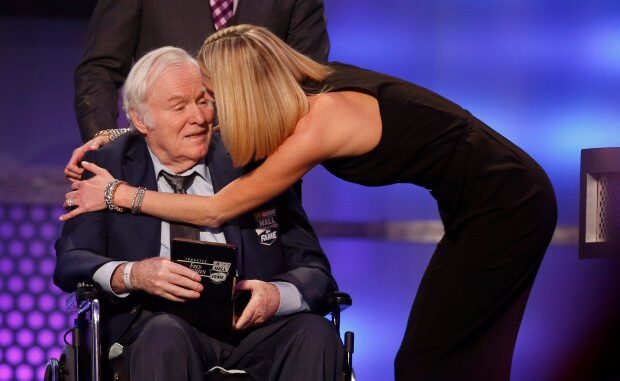
Former NASCAR superstar Fred Lorenzen has been diagnosed with Stage 3 chronic traumatic encephalopathy (CTE) following a postmortem examination of his brain, revealing a possible link between his racing career and decades of cognitive and behavioral decline.
The findings, shared by his family in October 2026, make Lorenzen the first former NASCAR Cup Series driver publicly reported to have received a CTE diagnosis. Researchers at the Boston University CTE Center examined his brain tissue after his death in December 2024 at the age of 89.
The announcement has renewed discussions about the long-term effects of repeated head impacts in motorsports and the need for better medical support for retired drivers. In honor of their father, Lorenzen’s children, Chris Lorenzen and Amanda Lorenzen-Gardstrom, have announced a $1 million donation to support CTE research and establish the Fred Lorenzen Memorial HelpLine.
Fred Lorenzen Brain Study Results: What Did Researchers Find?
The Fred Lorenzen brain study results confirmed Stage 3 CTE, a progressive neurodegenerative disease associated with repeated head impacts. Researchers at the Boston University CTE Center conducted the postmortem analysis to investigate the brain changes that may have contributed to his long-term health problems.
According to neuropathologist Dr. Thor Stein, Lorenzen had a less common form of the disease known as cortical-sparing CTE. This subtype accounts for approximately 11% of CTE cases and is associated with an earlier onset of behavioral, mood and movement-related symptoms.
Unlike the pattern frequently observed in former football players, Lorenzen’s brain showed a greater burden of disease in deeper brain structures rather than predominantly in the frontal regions of the brain.
Researchers noted that his history of racing injuries, behavioral changes, cognitive decline and Parkinson-like motor symptoms was consistent with the findings from the brain examination.
CTE can currently be definitively diagnosed only after death. Scientists are investigating potential biomarkers that could eventually help identify the disease in living people and improve access to treatment.
What Is Stage 3 CTE?
Chronic traumatic encephalopathy, commonly known as CTE, is a degenerative brain disease associated with repeated head impacts over time. It has been studied extensively among former contact-sport athletes and military personnel exposed to repeated head trauma.
Stage 3 is the third of four pathological stages used to classify CTE based on changes identified in brain tissue. The staging describes the extent of the disease’s pathological features and does not provide a precise timeline for how symptoms develop in an individual.
Symptoms associated with CTE may include:
- Changes in mood, personality and behavior.
- Memory problems and cognitive decline.
- Increased anxiety, irritability or impulsivity.
- Difficulties with movement and coordination.
- Problems with judgment and everyday functioning.
Not everyone with a history of head injuries develops CTE, and symptoms alone cannot establish a diagnosis. Researchers also continue to investigate why the disease affects individuals differently.
How Did CTE Affect Fred Lorenzen’s Life?
Fred Lorenzen retired from professional racing at age 37, but his health reportedly deteriorated over the following decades. His children recalled noticing changes in his personality and behavior long before they understood the possible connection to his racing career.
Amanda Lorenzen-Gardstrom said her father became increasingly impulsive, angry and repetitive during her childhood. Chris Lorenzen also remembered growing anxiety, impatience and a significant loss of his father’s ability to manage everyday situations.
By 2006, his family had noticed that his patience had diminished considerably and that he struggled to participate comfortably in important family events.
The decline continued. Lorenzen experienced changes in his walking ability, suffered a serious fall in 2010 and never fully recovered. He eventually lost the use of his legs and spent his final 14 years using a wheelchair.
His family also described the financial and emotional challenges of arranging around-the-clock care as his condition progressed.
Lorenzen had lived with dementia for approximately 20 years before his death on December 18, 2024. His CTE diagnosis has given his children a possible explanation for the changes they witnessed, although it cannot undo the years of hardship their family experienced.
Fred Lorenzen’s Racing Career and NASCAR Legacy
Fred Lorenzen, nicknamed “The Golden Boy,” was one of NASCAR’s first major stars. Known for his smooth driving style, competitive spirit and popularity with fans, he became one of the most recognizable drivers of the 1960s.
His career achievements included:
- 1965 Daytona 500 winner: Lorenzen captured one of NASCAR’s most prestigious victories.
- 26 premier-series victories: He established himself as a leading competitor during his NASCAR career.
- Eight wins in 1964: He won eight of the 16 races he entered that season, including five consecutive victories.
- NASCAR Hall of Fame: He was inducted in 2015.
- NASCAR’s 75 Greatest Drivers: He received the honor in 2023.
Lorenzen also became the first NASCAR driver to earn more than $100,000 in a single season, an important milestone during the sport’s early commercial growth.
He competed against legendary names including Richard Petty, Junior Johnson and Fireball Roberts. His success with Holman-Moody, particularly behind the wheel of the No. 28 Ford, helped establish his place in NASCAR history.
Although Lorenzen stepped away from racing in 1972, his legacy has now expanded beyond his accomplishments on the track to include the growing discussion about brain health and driver safety.
Fred Lorenzen Memorial HelpLine: Family Donates $1 Million
Following the release of the Fred Lorenzen brain study results, his children announced a $1 million donation to the Concussion & CTE Foundation.
The contribution will support research into CTE and establish the Fred Lorenzen Memorial HelpLine, which is intended to connect drivers and their families with information, care and support.
For Chris and Amanda, the initiative is especially important because they experienced firsthand how difficult it can be to find appropriate care for a former driver with serious neurological problems.
The family hopes the help line will assist other racing families who may face similar challenges, particularly those who cannot afford extensive long-term medical care.
Their donation also highlights the need for additional research into neurological conditions among former motorsports competitors.
Why Are Researchers Concerned About CTE in NASCAR?
Motorsports presents a distinct set of risks for brain injuries. Drivers can experience high-speed crashes, abrupt acceleration and deceleration, and repeated forces that move the brain within the skull.
These forces may occur even when a driver does not lose consciousness or display obvious concussion symptoms.
Dr. Stein explained that repeated impacts and acceleration forces can contribute to brain damage over time. However, the relationship between specific racing injuries and CTE requires further investigation.
Research into CTE among former football players is more extensive than research involving former racing drivers. Lorenzen’s diagnosis could help scientists better understand how repeated head impacts affect athletes in high-speed motorsports.
His case does not establish how common CTE is among NASCAR drivers. More donated brains, larger studies and long-term clinical research will be needed to determine the prevalence of the disease and identify the factors that increase risk.
NASCAR Safety Improvements and the Risk of Long-Term Brain Injuries
NASCAR has introduced significant safety improvements over the past two decades to reduce the consequences of crashes.
Following Dale Earnhardt’s fatal accident in 2001, NASCAR mandated the use of head-and-neck restraint systems designed to limit dangerous movement during impacts. The organization also implemented SAFER barriers, which help absorb crash energy and reduce forces transmitted to drivers.
Additional developments have included improvements in helmets, seats, seat belts and cockpit design, alongside concussion testing and the collection of crash data.
Researchers have also worked with motorsports organizations to measure the forces experienced by drivers during racing incidents. Sensors incorporated into mouthpieces can provide information about head movement and impacts, helping engineers identify potential safety improvements.
Despite these advances, concussions and other injuries remain possible. A safer car can reduce certain risks, but it cannot eliminate every potential source of neurological damage.
Lorenzen’s diagnosis has therefore raised an important question: How can the sport better protect drivers not only during their careers but also throughout retirement?
Darrell Waltrip’s Health Raises Further Questions About CTE
The news about Lorenzen follows a September 2026 announcement from the family of NASCAR Hall of Famer Darrell Waltrip.
Waltrip’s family said he had been diagnosed with frontotemporal degeneration, a progressive neurological condition, complicated by possible CTE. They attributed the potential connection to injuries sustained during his racing career.
Unlike Lorenzen’s confirmed postmortem diagnosis, Waltrip’s family’s statement described CTE as a possibility rather than a confirmed diagnosis.
The two cases have increased attention on the long-term health of former drivers. However, they should not be treated as evidence that all retired NASCAR competitors will develop CTE or other neurodegenerative conditions.
Experts say more research is needed to understand the frequency, causes and progression of these disorders among motorsports athletes.
Can CTE Be Diagnosed in Living People?
At present, CTE can be definitively diagnosed only through a postmortem examination of brain tissue. Doctors may investigate symptoms and a person’s history of head injuries, but these factors cannot independently confirm the disease during life.
Researchers are exploring biomarkers that could make earlier identification possible. These efforts include studying biological signals associated with brain pathology and developing methods that could eventually support diagnosis without waiting until death.
According to Dr. Stein, advances in research technology have created opportunities to investigate whether pathological changes can be detected through blood-based biomarkers.
If scientists develop a reliable diagnostic method, it could help affected individuals access appropriate medical care earlier and support clinical trials for potential treatments.
However, a validated test and an effective cure remain important goals for future research rather than established options currently available to patients.
Fred Lorenzen Brain Study Results: What Happens Next?
The Fred Lorenzen brain study results represent an important moment in the discussion about head injuries in NASCAR. His Stage 3 CTE diagnosis provides researchers with evidence that a former elite stock-car driver experienced the disease, while his family’s account illustrates the profound consequences of his long decline.
The diagnosis does not prove that racing alone caused every health problem Lorenzen experienced. Nevertheless, his history of racing injuries and the findings from his brain examination have strengthened calls for more research into repeated head impacts in motorsports.
His children’s $1 million contribution to the Concussion & CTE Foundation is intended to help other drivers and families receive support while advancing scientific understanding of the disease.
For NASCAR, the challenge is to build on existing safety improvements and ensure that retired competitors have access to appropriate neurological care.
Lorenzen’s achievements made him one of the sport’s early superstars. His final legacy may also be measured by whether his story helps researchers develop better ways to prevent, identify and treat brain injuries in future generations of drivers.


Leave a Reply