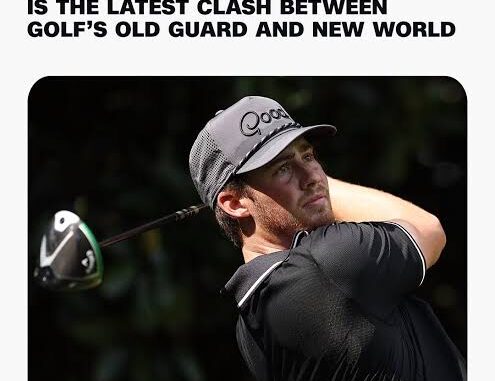
The Callaway ad controversy has sparked widespread discussion across the golf world after a promotional video featuring Good Good Golf drew criticism for appearing to make light of violence against women. The advertisement, created to promote a Callaway driver collaboration, was quickly removed after backlash from viewers.
What Happened in the Callaway Ad?
The controversial advertisement featured Good Good Golf co-founder Garrett Clark and fellow brand content creator Alexis Miestowski. In the opening scene, Clark appeared to shove Miestowski to the ground while promoting the driver.
The concept was reportedly intended as a parody of the horror movie Obsession. According to Clark, the storyline centered on the idea that anyone who touched the driver would become “possessed” by an obsession with it. However, the execution generated immediate criticism because of the depiction of a man pushing a woman.
The advertisement was subsequently removed from Good Good and Callaway’s social media channels after the backlash intensified.
Garrett Clark Apologizes for the Ad
Garrett Clark later addressed the controversy in an extended video, accepting responsibility for his involvement in the campaign. He described the concept as a mistake and acknowledged that the criticism directed at the advertisement was justified.
Clark also explained that he did not actually push Miestowski during the filming of the scene and provided behind-the-scenes footage to explain how the sequence was created.
Despite that explanation, the controversy continued because many viewers believed the advertisement itself crossed a line regardless of whether the action was staged.
Callaway’s Role in the Controversy
The situation also brought attention to Callaway because the advertisement was created as part of a collaboration between the company and Good Good Golf. The supplied source describes the promotion as a branded driver collaboration and says the advertisement was removed following the backlash.
That connection placed additional scrutiny on the marketing campaign and the approval process behind the controversial video.
Backlash Spreads Beyond Social Media
The fallout quickly moved beyond online criticism. Good Good Golf had developed a major following among younger golf fans, with more than two million YouTube subscribers. The company also raised $45 million in funding in March 2025.
Reports also said that retailers, including Golf Galaxy and Dick’s Sporting Goods, removed Good Good merchandise from their online stores. Questions were also raised about whether the PGA Tour would continue with Good Good as the title sponsor of a planned November event.
PGA Tour Event Faces Questions
The controversy has created uncertainty around Good Good’s relationship with the PGA Tour. The supplied report says questions have been raised about the future of a newly created event in November, potentially adding another major consequence for the golf-content brand.
Alexis Miestowski Also Faces Online Abuse
Amid the backlash, Clark highlighted another troubling aspect of the controversy: online abuse directed toward Miestowski.
According to Clark, the Good Good content creator received hostile and vulgar messages following the advertisement’s release. He argued that attacking Miestowski was contradictory to calls for an end to violence and abuse.
The situation has therefore created a wider conversation about how controversial marketing can affect not only companies but also individuals who appear in advertising campaigns.
What Happens Next?
The Callaway ad controversy has put Good Good Golf’s business relationships and future partnerships under increased scrutiny. While the advertisement has been removed and Clark has apologized, the consequences could extend beyond the original campaign.
Clark acknowledged that the advertisement was a poor concept and said he hoped viewers could forgive Good Good and himself as the brand works to move forward. He also emphasized the company’s goal of growing the women’s side of golf.
For now, the controversy remains a significant moment for Good Good Golf and serves as a reminder of the risks brands face when provocative advertising fails to land as intended.