
Simone Biles: Blog Post | Comments on Charlie Kirk | What Did She Actually Say?
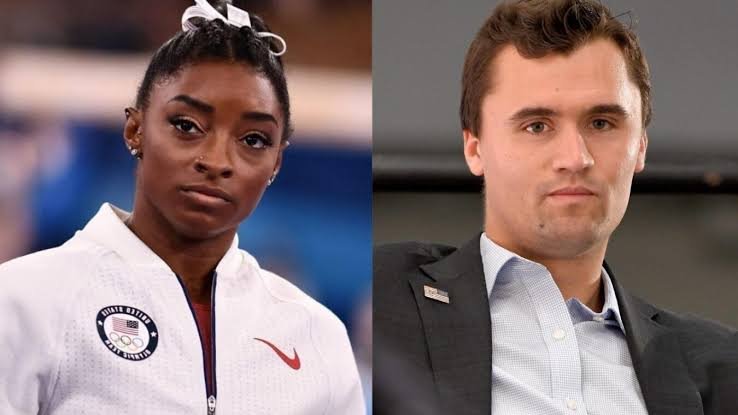
In recent days, a viral claim has been spreading on social media: that Olympic gymnast Simone Biles wrote a raw, emotional blog post about Charlie Kirk after his death, “finally responding” to things he had said in the past. But is there any truth to that? This article delves into what really happened, what Charlie Kirk said about Simone Biles, how the misinformation spread, and how to tell fact from fiction.
Table of Contents
-
What’s the Claim?
-
Who Are Simone Biles and Charlie Kirk?
-
What Charlie Kirk Said in 2021 About Simone Biles
-
The Viral Claim: Did Simone Biles Write a Blog Post After Kirk’s Death?
-
How False Information Spread: Misinformation, Social Media, and “Fake Blog Posts”
-
Why People Believe It: Context, Grievance, and Confirmation Bias
-
What Simone Biles Has Said About Her Experience, Mental Health, and Public Criticism
-
How Media Outlets Have Debunked the Claim
-
Lessons on Media Literacy & Verifying Claims
-
Conclusion
1. What’s the Claim?
The claim is simple: following the assassination of conservative activist Charlie Kirk, Simone Biles allegedly published a blog post mocking him — responding to past criticism, detailing her emotional suffering, and accusing him of wrongdoing. Posts circulated on Facebook and other platforms claimed this post was “raw,” “emotional,” and “brave,” suggesting Biles waited “years to have the final word.”
Yet, multiple fact-checking and news sources have stated that this blog post does not exist, and Biles has not made any such public comment about Kirk following his death.
2. Who Are Simone Biles and Charlie Kirk?
-
Simone Biles is an American gymnast, widely considered one of the greatest gymnasts of all time. She has won many Olympic and World Championship medals, and is also known for speaking out about mental health, athlete welfare, and public pressures.
-
Charlie Kirk was a conservative activist, founder of Turning Point USA. He has been a polarizing figure in American political discourse. In September 2025, he was shot and killed at Utah Valley University.
Their names come up together in this controversy because of things Kirk said about Biles in 2021 when she withdrew from some Olympic events, citing mental health issues. That feeds into the current false claim.
3. What Charlie Kirk Said in 2021 About Simone Biles
These are the documented remarks from Charlie Kirk in 2021, after Simone Biles withdrew from parts of the Tokyo Olympics citing mental health reasons:
-
He called her “weak,” “selfish,” and “immature.”
-
He said that she was “a shame to the country.”
-
He accused her of letting down the country, especially in regard to expectations for U.S. athletes.
-
He said, “We are raising a generation of weak people like Simone Biles.”
These remarks were criticized by many, especially in the context of athlete mental health, and the debate at the time included discussions of how much pressure is placed on elite athletes, particularly women, particularly those in the public eye.
4. The Viral Claim: Did Simone Biles Write a Blog Post After Kirk’s Death?
Short answer: No.
-
There is no credible evidence that Simone Biles wrote or published such a blog post after Charlie Kirk’s death.
-
The claim originated as a viral social media post, especially on Facebook, falsely attributing strong, emotional statements to Biles. The posts often talk about damage, emotional suffering, “finally answering,” etc.
-
Reliable fact-checkers (Times of India, Economic Times, Hindustan Times, etc.) have concluded the story is fabricated.
-
Even the source that claimed the blog post exists has no verifiable link to the alleged blog, speech, or official statement from Biles.
So far, everything about the alleged blog post appears to be false or unverified.
5. How False Information Spread: Misinformation, Social Media, and “Fake Blog Posts”
Understanding the mechanics of how this claim spread helps prevent falling for similar false stories in the future.
-
Mixing true events with false claims: The fact that Kirk did criticize Biles in 2021 gives a kernel of truth that makes the false claim seem more plausible. People remember that there was controversy.
-
Sensational headlines: The posts use charged language — “raw,” “finally responds,” “courageous clapback” — which attracts attention and shares. This type of content tends to perform well on social platforms.
-
Lack of attribution or verifiable source: Many of these claims lack a link to a real blog, article, or Biles statement. Sometimes they refer to “The World Daily” or “viral blog,” etc., which are suspicious sources known to spread misinformation.
-
Use of AI-generated content: Some reports (for example from the Economic Times) have flagged the role of AI-generated posts or articles in creating realistic but false content.
-
Social proof: Once many people share or comment, the claim looks more credible simply because it appears frequently. People assume “if many people shared it, it must be true.”
6. Why People Believe It: Context, Grievance, and Confirmation Bias
Why do such false claims take off so quickly? Several psychological and social factors are at work:
-
Existing controversies: Biles’ withdrawal in Tokyo over mental health was itself controversial, and outspoken critics (including Kirk) were part of that narrative. So there’s already conflict in the public memory.
-
Desire for justice or vindication: Some people might feel that public figures who criticized Biles should answer for their hurtful remarks, so the narrative of her “finally responding” is appealing.
-
Echo chambers and group identity: Depending on one’s political leanings or values (e.g., free speech, mental health, cancel culture), people are more apt to believe stories that align with their viewpoints.
-
Low incentive to verify: On social media, speed and sensationalism often beat accuracy in terms of what gets shared. Many users don’t check original sources.
7. What Simone Biles Has Said About Her Experience, Mental Health, and Public Criticism
While the alleged blog post about Charlie Kirk is false, there is verified information about Simone Biles’ own statements and experience:
-
In the Tokyo 2021 Olympics, she withdrew from the team final citing mental health reasons, referencing difficulty with “twisties” (a dangerous loss of spatial awareness during aerial moves) and saying she was not having “as much fun” and wanting to avoid injury.
-
She has spoke publicly about how the pressure to perform for others (public, media, etc.) sometimes takes away from the joy of sport.
-
She has not made any recent public statement (as of the latest credible reports) addressing Charlie Kirk’s death or any response to his 2021 criticisms.
8. How Media Outlets Have Debunked the Claim
Several reputable news organizations have published fact checks:
-
Times of India: Reported that the viral claim is false; Biles did not write a blog post mocking Kirk.
-
Economic Times: Unpacked how the claim spread, how it is a part of social media misinformation, and confirmed no evidence for the blog post.
-
Hindustan Times: Wrote an article titled “Simone Biles mocked Charlie Kirk’s death in new blog post? Here’s the truth,” concluding that the blog post is fake.
-
Online fact-checking sites like Primetimer also analyzed the claim and found it lacks verifiable sources.
9. Lessons on Media Literacy & Verifying Claims
From this case, there are several important takeaways for readers:
-
Check the source: If someone says “Simone Biles wrote a … blog post,” try to find the post. Who published it? Is it actually on Biles’ official website or verified account?
-
Look for corroboration: Does any major outlet report it? If only lesser-known or social media sources claim it, it might be suspect.
-
Be wary of sensationalism: Dramatic wording is often used to provoke emotional reaction and people’s shares.
-
Understand confirmation bias: If a claim fits neatly into a narrative you already believe, it may spread more easily among your network, regardless of its truth.
-
Consult fact-checkers: Organizations or media outlets that specialize in debunking false claims are very useful.
-
Don’t share before verifying: Sharing false information can harm reputations and fuel misinformation cycles.
10. Conclusion
To sum up:
-
Simone Biles did not write any blog post about Charlie Kirk after his death. There is no verified statement of hers addressing his passing in the way the viral posts describe.
-
The claim is a piece of misinformation, mixing real past events (Kirk’s criticisms in 2021) with false reporting.
-
Media, fact-checkers, and reputable outlets agree the story is false.
-
This case underscores the importance of checking sources, being skeptical of sensational claims, and being aware of how social media can amplify false narratives.
FAQs
Q1. Did Simone Biles respond to Charlie Kirk’s criticism in 2021?
A1. Not in the sense of a public blog post or long written “clap-back” after his death. She did respond in other ways: withdrawing from competition due to mental health, speaking about pressure, etc. But she has not issued any verified public statement specifically addressing his death.
Q2. What did Charlie Kirk say about Simone Biles in 2021?
A2. He criticized her decision to withdraw from parts of the Tokyo Olympics team finals, calling her “weak,” “selfish,” “immature,” and “a shame to the country,” and said that withdrawing allowed a foreign team (Russia) to win.
Q3. Is there any evidence of Simone Biles making remarks after Charlie Kirk’s death?
A3. No verifiable evidence has surfaced. Reputable media outlets have checked, and there is no record of a blog post, social media post, or public speech by Biles about Kirk’s passing in the way the viral claim suggests.
Q4. Why do such false stories gain traction?
A4. Because they leverage people’s pre-existing knowledge or feelings (e.g., past controversies), use emotional and sensational language, are easy to share on social platforms, and often lack immediate fact checking. Confirmation bias, the lure of “justice” or “vindication,” and social media algorithms all help.
Q5. How can I verify if a claim like this is true or false in the future?
A5. Steps include: checking primary sources (Simone Biles’ own official social media, website), seeing if credible news or fact-checking organizations report it, checking for a direct link or published text, comparing multiple sources, and being skeptical of claims without evidence.