Simone Biles & Charlie Kirk: Debunking the Viral Blog Claim
In September 2025, a series of social media posts circulated claiming that Simone Biles had written an emotional blog post mocking Charlie Kirk following his death. The claim spread rapidly on Facebook, Instagram, and other platforms, and many users believed it was true. However, this article will show that no such blog post exists, that the claim is false, and examine the context, motivations behind the viral falsehood, and what this reveals about misinformation online.
Who are Simone Biles and Charlie Kirk?
-
Simone Biles is an American artistic gymnast, widely considered one of the greatest of all time. Her career is decorated with world championship and Olympic medals. She has also become prominent for openly discussing mental health challenges and advocating for athletes’ well-being.
-
Charlie Kirk is a conservative political activist and founder of Turning Point USA. He has been involved in political commentary, often eliciting controversy.
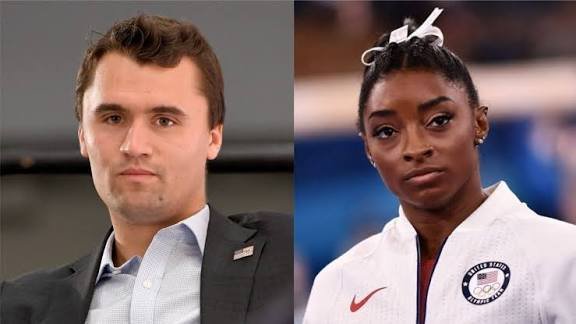
They have intersecting public histories, especially surrounding the Tokyo 2020 Olympics (held in 2021 due to the COVID-19 pandemic), when Biles withdrew from some events citing mental health challenges. In response, Charlie Kirk made harsh public statements, calling her “selfish,” “immature,” even a “shame to the country.”
What was the viral claim?
-
The posts alleged that Simone Biles published a “raw, emotional” blog in which she responded to Charlie Kirk’s 2021 remarks, and also mocked him after his reported death. This alleged blog supposedly described personal and family harm, sleepless nights, and emotional trauma caused by Kirk’s criticism.
-
It gained thousands of reactions and shares, fueled by shocking headline style: “She waited years to have the final word…” and similar framing.
Why the claim is false
Multiple reputable fact-checking and news organizations have investigated the claim:
-
No credible source or verified outlet has found any evidence that Simone Biles wrote this blog post. No link, publication, or author attribution exists apart from the viral, unverified social media posts.
-
Some of the stories are traced back to The World Daily, which is known for publishing satirical or misleading content.
-
Reports from reliable sources such as Economic Times, Hindustan Times, PrimeTimer, Times of India etc., have explicitly called the claim a hoax or misinformation.
-
The claim appears to be an example of misinformation augmented by AI-generated text and social media virality.
The history between them: Tokyo Games, mental health, and critique
Understanding the viral claim requires knowing what actually happened in 2021:
-
During the Tokyo 2020 Olympics, Simone Biles withdrew from the team final, citing the phenomenon known as “the twisties” – a mental and physical block in gymnastics that can be dangerous. She also withdrew from other events to protect her mental health.
-
Charlie Kirk responded on his podcast and in public, branding her decision as “weak,” “selfish,” “immature,” and a “shame to the country.” These comments generated widespread debate about mental health in sports, athlete autonomy, and how much pressure athletes (especially women and people of color) face.
-
Biles’ actions were widely supported by fellow athletes, sports administrators, mental health advocates, and many members of the public. Her decision sparked deeper conversations about mental health, athlete safety, and expectations from public figures.
Thus, the viral posts try to build on a real past tension—but then falsely ascribe new statements (a blog post after Kirk’s death) that do not exist.
Effects & implications of the false claim
-
Reputational risk and emotional impact — False claims like this can damage both the reputation of high-profile figures and cause distress, especially to those who are the target (in this case Biles), and their families.
-
Further polarization — These narratives feed into pre-existing divisions: about mental health, about political ideology, about freedom of speech vs responsibility. People inclined to believe negative stories about Biles may use this as “proof,” deepening distrust.
-
Misinformation & digital media literacy — This case is a strong example of how fake content spreads: mixing truth (the past conflict), plausible narrative (could Biles comment now?), with sensational wording, but lacking verifiable sources. It underscores the importance of fact checking.
-
Challenges with platform moderation — Social media platforms often struggle to stop the spread of AI-generated misinformation or misleading content once it goes viral.
How to fact – check such claims
Here are some best practices if you encounter similar stories:
-
Check for credible news outlets (Reuters, BBC, AP, etc.) to see if they report it. If none do, it’s a red flag.
-
Look for direct statements from those involved (e.g. official social media accounts of Simone Biles) rather than third-party posts.
-
Search for the alleged article/blog title—if it’s genuine, it will often appear in multiple reliable sources.
-
Examine the source: is it known for satire or false content? Does it give verifiable details?
-
Be wary of emotionally charged language (“finally had the final word,” etc.) — sensational framing is common in false claims.
Summary
-
Did Simone Biles write a blog post mocking Charlie Kirk after his death? No. There is no evidence she did. The claim is false.
-
The story builds on a real past conflict: in 2021, Kirk severely criticized Biles after her Tokyo withdrawal. That is true.
-
The viral content appears to be AI-generated or misleading, taking snippets of reality and mixing them with fabrication.
-
Cases like this underline the importance of verifying claims before sharing, especially on social media.
FAQs
1. After Charlie Kirk’s death, did Simone Biles issue any statement or blogpost regarding him?
No. There is no verified statement or blogpost by Simone Biles regarding Charlie Kirk’s death. Multiple fact-checking sources confirm this is a false claim.
2. What did Charlie Kirk say about Simone Biles in 2021?
In 2021, after Biles withdrew from certain gymnastics events at Tokyo citing mental health issues (“twisties”), Kirk called her “selfish,” “immature,” a “shame to the country,” and said that America is “raising a generation of weak people like Simone Biles.”
3. Is the viral post that claims there was a blog by Biles confirmed to be AI-generated?
While “AI-generated” is used by fact checkers to describe the nature of the text and the lack of credible source, it’s not always possible to definitively prove it was generated by AI. But the language, the pattern of misinformation, and absence of verification suggest that it is highly likely.
4. Why do such false stories spread quickly?
Because they combine: a) shock value / emotionally charged content, b) a kernel of truth (existing public conflict), c) vague sourcing that sounds plausible, d) social media algorithms that amplify engagement. All of this makes it likely for false stories to go viral.
5. How can readers protect themselves from misinformation?
-
Always check reputable news sources.
-
See if direct quotes are sourced and verifiable.
-
Look for the absence of proof as a warning sign.
-
Use fact-checking websites (Snopes, FactCheck.org, etc.).
-
Be cautious of sensational posts, especially on Facebook or X (formerly Twitter).