Introduction
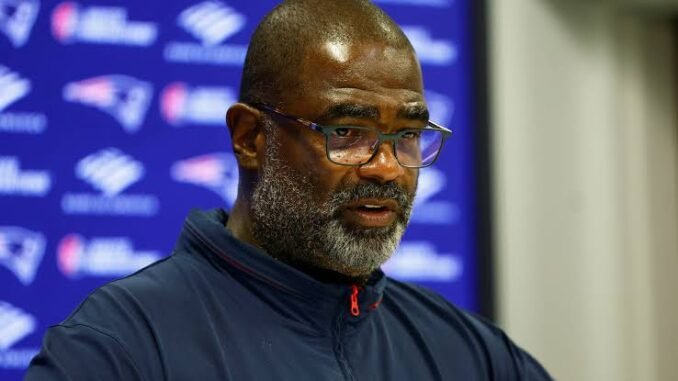
Terrell Williams is a figure of growing interest in sports media, primarily recognized as a football coach in the NFL. But his life story contains far more depth — health struggles, controversy from his boxing past, public apologies, and financial status. In this article, we explore multiple facets of Terrell Williams: his health journey, role with the New England Patriots, coaching career, involvement in boxing controversy, public apology narratives, and his estimated net worth.
Early Life & Coaching Journey
Terrell Williams was born on June 19, 1974, in Los Angeles, California. He played college football at East Carolina and later transitioned into coaching. His coaching career spans over two decades, beginning in the late 1990s at the college level and eventually rising to the NFL ranks.
He held defensive line coaching roles at multiple universities — Fort Scott (1998), North Carolina A&T (1999–2001), Youngstown State (2002–2003), Akron (2004–2005), Purdue (2006–2009), and Texas A&M (2010–2011). His NFL journey began with the Oakland Raiders as a defensive line coach, followed by stints with the Miami Dolphins, Tennessee Titans, and Detroit Lions.
In 2025, Williams joined the New England Patriots as their defensive coordinator, reuniting with head coach Mike Vrabel, under whom he served previously in Tennessee.
Health: Struggles, Scares & Recent Diagnosis
Past Health Warnings & “Health Scare”
Even before his Patriots tenure, Williams had a “health scare” in March 2025 that forced him to step away from team facilities. He declined to reveal specifics, saying he would share more later. Internally, the team sought to manage his responsibilities remotely while he recovered.
During training camp in August 2025, he collapsed during practice due to dehydration. He was transported off on a cart but was conscious and eventually recovered. After that incident, the team took extra precautions.
In press statements, Williams admitted that over the years he had ignored medical advice, stressed that “living invincible” was a mistake, and noted he needed to better care for himself.
Prostate Cancer Diagnosis
On September 26, 2025, Patriots head coach Mike Vrabel publicly confirmed that Terrell Williams had been diagnosed with prostate cancer. Williams, 51 at the time, had begun treatment and was meeting with medical specialists to determine a care plan. This diagnosis explained his limited presence with the team and why inside linebackers coach Zak Kuhr had been stepping in to call the defense.
Vrabel expressed strong support, acknowledging Williams’ significance to the coaching staff and indicating that Williams would remain involved to the extent possible.
As of now, Williams is undergoing treatment while maintaining his role as defensive coordinator in name.
Role in the New England Patriots
Appointment & Early Tenure
When the Patriots hired Williams in January 2025, it was seen as a reunion with Vrabel, with whom he had worked in Tennessee. His role elevated from a position coach to the coordinator level, giving him control over defensive scheme, play-calling, and overall defensive strategy.
By August, after missing much of the offseason due to his unspecified medical issue, Williams returned to full command of the defense. He emphasized “effort and finish” as the core tenets of the defense, and expressed optimism about how the unit was shaping up.
However, Williams’ recurring health issues and absences created uncertainty in staffing consistency, leading assistant coaches (especially Zak Kuhr) to assume interim play-calling duties.
Adjustments Amid Health Challenges
Due to his health constraints, Williams had to scale back on-field responsibilities at times, and delegate day-of-game decision-making to Kuhr. The team maintained continuity by structuring handovers and planning for scenarios where Williams could not attend.
His return to full activity is tentative and dependent on how his cancer treatment progresses.
The Boxing Controversy: Terrel Williams & Prichard Colon
Before settling into a coaching career, Williams had a background in boxing. That path later drew controversy over a match that left opponent Prichard Colon permanently disabled.
The Fight & Aftermath
In their bout, Williams landed multiple illegal strikes to Colon’s head (behind the head) that contributed to Colon’s collapse. Colon later suffered brain bleeding, entered into a coma, and remained hospitalized for an extended period.
The fight also saw deductions of points: Colonel was penalized two points for a low blow, and in a later round, Williams had a point deducted for illegal strikes. Williams has publicly stated he did not act maliciously and has expressed remorse and concern for Colonel’s health.
From interviews, Williams admitted:
“My heart dropped, my stomach dropped. I’m praying for him multiple times daily … I cannot enjoy this victory. I’m worried about Prichard.”
The Colon family filed a $50 million lawsuit against Williams, the promoter, and ringside parties, though as of recent reporting, the case has seen little movement toward trial.
Public Perception & Criticism
This incident has loomed over Williams’ public image. Critics argue accountability was insufficient, and that the oversight by referees and medical officials was inadequate. Some boxing fans on discussion forums question why Williams was not criminally charged, or more heavily penalized.
Williams, for his part, has continually expressed regret and compassion, stating he would never intentionally harm another fighter.
The Apology Narrative
Given the gravity of Colon’s injuries, Williams’ public apologies and statements have been under scrutiny.
-
As noted, he has repeatedly said he prays daily for Colon’s recovery and that he cannot “enjoy this victory.”
-
He insists he never intended malicious harm, attributing errors to the heat of the moment, adrenaline, and split-second judgment in a fight.
-
To some critics, his apology feels necessary but insufficient, given the irreversible consequences to Colon’s life.
-
The lack of legal resolution or criminal charges has left many feeling the public apology is the only real accountability.
Thus, Williams’ apology is a recurring theme in narratives about him: a mixture of remorse, defense, and attempts at redemption in the public eye.
Net Worth & Financial Standing
Estimating net worth for coaches and ex-boxers can be speculative, especially if private financial records are limited. As of this writing, there is no verified public source confirming Terrell Williams’ net worth.
However, some educated approximations can be made:
-
NFL position coaches and coordinators often command six- to seven-figure annual salaries.
-
Williams has had long-term employment in high-level coaching roles, which likely afforded him steady compensation and benefits.
-
The boxing career—while controversial—may also have contributed modest earnings historically.
-
The high-profile lawsuit and legal costs, potential settlement obligations, and health-related expenses could offset assets.
Because of the limited transparency, many online estimators and fan sites may list a speculative net worth (often in the range of tens to low hundreds of thousands or low millions), but these should be taken with caution.
In short: Williams’ net worth is not reliably documented, and any figure you find publicly should be considered approximate and unverified.
Legacy, Challenges & Looking Ahead
Legacy & Influence
Terrell Williams is respected in coaching circles for his defensive acumen, his mentorship of players and younger coaches, and his perseverance through adversity. His elevation to a defensive coordinator role at the Patriots is a testament to his experience and reputation.
Yet, his legacy is inevitably entangled with the tragic outcome of the Colon fight, which remains a controversial chapter. His attempt to balance apology, responsibility, and forward progress is integral to how history may judge him.
Challenges
-
Health: His prostate cancer diagnosis now dominates his personal and professional life, and ongoing treatment will influence how much time and capacity he can dedicate to coaching.
-
Coaching consistency: The Patriots must manage potential absences and maintain defensive stability while adjusting to his availability.
-
Public perception: The unresolved legal and moral questions around the boxing incident continue to cast a long shadow.
-
Financial pressures: Medical costs, legal expenses, and the uncertainties of coaching income could all impact his financial future.
What Comes Next
-
Continued treatment and medical updates will shape his return to full coaching duties.
-
The Patriots organization may need contingency plans for defensive leadership.
-
Legal resolution (if any) or public closure around the Colon lawsuit could increasingly define his public reputation.
-
Williams may increasingly use his personal experience (especially health) to influence players on self-care, resilience, and accountability.
Conclusion
Terrell Williams’ journey is one of notable achievement and haunting complexity. From a steep ascent through the coaching ranks to a high-profile role with the New England Patriots, from serious health battles to controversy from his boxing past, his public narrative is multi-layered. His apology for the boxing incident, the unanswered legal questions, and his ongoing fight with cancer shape how he is viewed today.
While his net worth remains unclear, his influence as a coach and the drama of his personal challenges make Terrell Williams a figure worthy of close attention for both football fans and general audiences alike.