
Simone Biles: Did Charlie Kirk Call Her a National Disgrace?
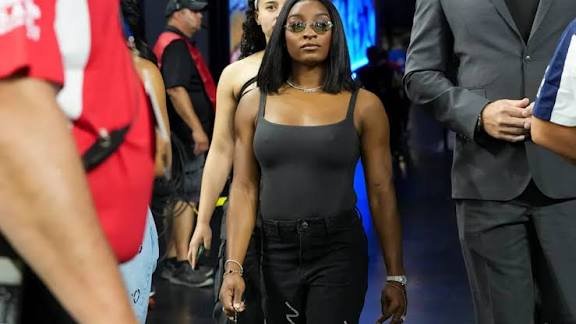
In July 2021, during the Tokyo Olympics, Simone Biles, widely regarded as one of the greatest gymnasts of all time, made headlines not only for her performances but also for her decision to withdraw from several events citing mental health concerns. Among the many reactions was one from conservative commentator Charlie Kirk, who strongly criticized her decision. This article explores what Charlie Kirk actually said, whether he did call Biles a “national disgrace,” the fallout, context, and what has transpired since.
Table of Contents
-
Who are Simone Biles and Charlie Kirk?
-
What happened at the Tokyo 2020 Olympics (held in 2021) regarding Simone Biles?
-
What exactly did Charlie Kirk say?
-
Did he use the phrase “national disgrace”?
-
Public reaction and support for Biles
-
Mental health and athletic pressure — broader considerations
-
Recent viral claims and misinformation
-
Timeline and aftermath
-
Why this topic matters
-
Conclusion
1. Who are Simone Biles and Charlie Kirk?
Simone Biles is an elite American gymnast, multiple Olympic gold medalist, and world champion. Her athletic achievements are immense, but so are her contributions to conversations on mental health, trauma recovery (having survived abuse by Larry Nassar), and the pressures elite athletes face.
Charlie Kirk is a political activist and commentator, founder of Turning Point USA. He is known for his commentary on conservative issues, youth politics, and gender/cultural debates. He maintains a high-profile platform, often weighing in on social issues, public figures, and controversies.
2. What happened at the Tokyo 2020 Olympics (in 2021) regarding Simone Biles?
At the Tokyo Olympics, Simone Biles first competed in the qualifications and helped her team reach the final. However, during the women’s team final, she withdrew after the first rotation. Her reason was mental health struggles, as she was experiencing the “twisties,” a phenomenon in gymnastics where the athlete loses spatial awareness while twisting in the air—a dangerous state.
Her withdrawal generated extensive global discussion about athlete mental health, pressure, expectations, and how they are treated by media, commentators, and the public. Many supported her, while some critics accused her of letting her team down or being unable to handle pressure.
3. What exactly did Charlie Kirk say?
Charlie Kirk criticized Simone Biles quite harshly in interviews and on his podcast, particularly after her withdrawal from the team final. Some of the key phrases he used include:
-
He called her “a shame to the country.”
-
He described her as “selfish”, “immature”, and “very selfish”.
-
He said the U.S. is “raising a generation of weak people like Simone Biles.”
-
He also called her a “sociopath.”
These words were part of a broader critique of her decision to withdraw from high‐pressure Olympic events, with the viewpoint that representing your country in such moments requires fortitude.
4. Did he use the phrase “national disgrace”?
The specific phrase “national disgrace” does not clearly appear in reliable source material attributed to Charlie Kirk. From the available reporting:
-
Newsweek cites Kirk calling Biles a “shame to the country,” but not “national disgrace.”
-
Salon, Vanity Fair, and others report “shame to the country,” “selfish sociopath,” etc.
-
The phrase “national disgrace” appears in several social media posts and viral content, but is not reliably sourced to Kirk via his public remarks according to credible fact‐checking outlets.
So, while Kirk certainly used harsh and disparaging language, the term “national disgrace” appears to be a paraphrase or embellishment by others rather than a direct quote from his original statement.
5. Public reaction and support for Biles
After Kirk’s criticisms:
-
Many individuals, sports figures, mental health advocates, and public commentators defended Simone Biles. They emphasized that her decision to withdraw prioritized her wellbeing—and that mental health is just as real and important as physical health.
-
U.S. Olympic Committee, former athletes, and even international voices praised her courage. There was widespread acknowledgment of the pressures placed on elite athletes, especially in the Olympics, and how those pressures can affect mental health.
-
Biles’ stance helped bring more awareness and conversations around mental health in sport, particularly the phenomenon of “twisties” which she spoke openly about.
6. Mental health and athletic pressure — broader considerations
To fully understand why the fallout from Kirk’s words was so intense, it’s crucial to consider the surrounding landscape:
-
Mental health stigma: Historically, athletes have been encouraged to “push through” emotional or psychological difficulties. Biles’ transparency challenged that norm.
-
Expectations and fame: As one of the greatest gymnasts ever, Biles carried enormous expectations—both from herself and from the public. The scrutiny was intense.
-
Safety in sport: The “twisties” are not trivial; they can pose real physical danger. Withdrawing when one’s safety is compromised is a serious choice.
-
Cultural and gender dimensions: Public criticism of female athletes, especially women of color, often reveals undertones of bias or unfair double standards. Some commentators felt that Biles was being judged more harshly because of who she is.
7. Recent viral claims and misinformation
In September 2025, after the tragic death of Charlie Kirk, a number of viral posts claimed that Simone Biles had written a blog mocking his death, or that she had made a “final word” post referencing his earlier attacks. These claims are false.
-
Hindustan Times and Times of India report that no such blog post exists, and no credible evidence has emerged of Biles publishing any response to his death.
-
PrimeTimer similarly reports that the Facebook posts spreading the claim are fake and that Biles has not made any public statements in response to Kirk’s passing.
So, part of the “national disgrace” phrasing issue may be mixed with these later misattributed claims or memes, which amplify or misrepresent what was said and what responses were made.
8. Timeline and aftermath
Here’s a rough timeline of the relevant events:
| Date | Event |
|---|---|
| July 2021 | Biles competes in Tokyo Olympics; withdraws from team final etc., citing mental health. |
| Late July 2021 | Charlie Kirk criticizes her, using terms like “shame to the country,” “immature,” “selfish,” “immaculate,” “weak” etc. |
| Following days/weeks | Public support and debate around her decision and the wider issue of mental health in sports. |
| September 2025 | Charlie Kirk dies (assassinated). |
| Immediately after | Viral posts claim Biles responded via blog, or that she had “finally responded” with strong language; fact‐checking shows no evidence she did. |
As of now, there is no verified or credible source that Biles used the phrase “national disgrace” herself in response, though such phrasing appears in viral media and social media posts, often as paraphrases or as part of rumors.
9. Why this topic matters
This controversy is more than just about word choice. It touches on deeper issues:
-
Athlete mental health: Biles brought visibility to something many perform quietly: mental strain, anxiety, trauma. It challenges sports culture to be more compassionate.
-
Media & public discourse: How do commentators treat public figures when they admit vulnerabilities? What is fair criticism vs. harmful rhetoric?
-
Misinformation risk: Viral posts can misrepresent what was actually said, especially when paraphrases become memes. It shows need for fact‐checking.
-
Cultural expectations: Particularly for women, Black women, and high-achieving people, there are often extra layers of scrutiny and judgment.
10. Conclusion
So, did Charlie Kirk call Simone Biles a “national disgrace”? The answer is: sort of—but not exactly. He used the phrase “shame to the country,” and he said things like “immature,” “selfish,” “selfish sociopath,” and criticized what he saw as her inability to handle pressure. Those are harsh words, but the specific phrase “national disgrace” appears to be a paraphrase or embellishment rather than a verified direct quote from him.
Furthermore, while various viral claims since 2025 have suggested Biles responded in a blog post or made other statements in her own words using strong language, these claims have been debunked by credible fact‐checkers. No public statement or documented response from Simone Biles confirms she used the phrase “national disgrace” or responded with that exact sentence.
The episode remains important, not for chasing exact word phrases, but for what it reveals: how society treats mental health in sport, how public figures are judged, how social media can distort reality, and how resilient individuals like Simone Biles push boundaries and expectations.
FAQs
Q1: Did Charlie Kirk literally call Simone Biles a “national disgrace”?
A: No credible source confirms he used that exact phrase. He called her a “shame to the country,” “selfish,” “immature,” among other criticisms. The wording “national disgrace” seems to be a paraphrase or amplification by others.
Q2: Why did Simone Biles withdraw from the 2021 Olympics events?
A: She withdrew during the team final due to mental health reasons, particularly being affected by “twisties,” which made her feel unsafe performing certain gymnastic routines. Her decision was supported by her coaches and medical team.
Q3: What was the public reaction to Charlie Kirk’s comments at the time?
A: There was substantial backlash from fans, athletes, mental health advocates, and sports institutions. Many defended Biles, emphasizing that her prioritizing her psychological wellbeing was valid and courageous. There was also debate about mental health, pressure in elite sports, and fairness in criticism.
Q4: Has Simone Biles ever responded directly to Charlie Kirk’s comments?
A: Not in words that are verified. She has spoken publicly about her own mental health and experiences, but no credible statement is found where she explicitly confronts Kirk’s specific phrasing with exact quotes like “national disgrace.” Viral posts claiming she did are not supported by fact‐checkers.
Q5: Are there recent claims or rumors about her responding after Kirk’s death?
A: Yes. After Charlie Kirk’s death in 2025, several viral posts claimed Simone Biles wrote a blog mocking him or responding strongly. These items have been investigated and found to be fake—no blog post or credible statement exists confirming those claims.