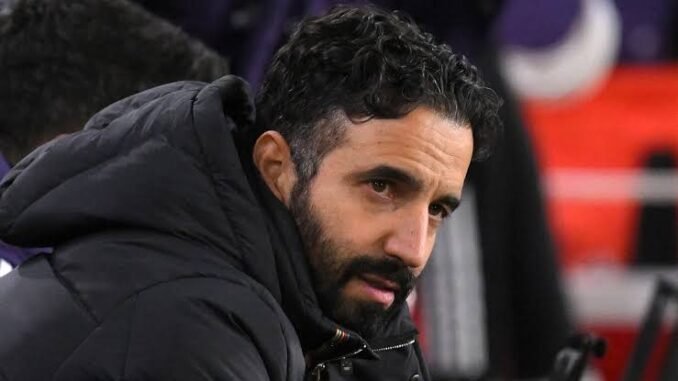
Ruben Amorim: Why Was He Sacked? Did Manchester United Really Sack Him?

On January 5, 2026, Manchester United officially announced the sacking of their head coach Rúben Amorim after a turbulent 14-month spell at Old Trafford. The decision marks yet another managerial exit for the Premier League giants — and it leaves fans and pundits asking: why exactly was he dismissed, and does this signal deeper problems at the club?
In this comprehensive analysis, we’ll unpack the reasons behind the sacking, examine Amorim’s record at United, and offer insights into what comes next for both the club and the Portuguese manager.
Who Is Rúben Amorim? A Brief Background
Rúben Filipe Marques Amorim is a Portuguese football manager and former professional midfielder. Before his high-profile move to Manchester United, Amorim made his name as a manager in Portugal, most notably with Sporting CP, where he won multiple trophies and earned acclaim for his tactical acumen.
In November 2024, Manchester United signed Amorim from Sporting CP on a long-term contract, with plans for him to usher in a new era of success. Expectations were high — but things didn’t go according to plan.
Manchester United Sacks Rúben Amorim: What Happened?
Yes — Manchester United officially sacked Rúben Amorim. The club issued a statement confirming his departure while stating that the decision came after careful consideration by senior leadership.
Amount of Time in Charge
Amorim served as United’s head coach for 14 months, overseeing 63 matches in total.
Interim Replacement
Following his dismissal, former United midfielder Darren Fletcher was named interim head coach while the club searches for a permanent successor.
Key Reasons for the Sacking
1. Inconsistent Results and League Position
Under Amorim, United achieved a modest return. They stood sixth in the Premier League at the time of his sacking — a position that falls short of the club’s ambitions. United also finished 15th last season, their worst league finish in decades.
This inconsistency in performance and lack of progress toward Champions League qualification played a major role in the club’s decision.
2. Tactical Issues and Inflexibility
Amorim’s tactical approach — most notably his stubborn reliance on certain formations like the 3-4-3 / 3-4-2-1 — drew criticism. Reports suggest that his refusal to evolve tactically frustrated both the club’s hierarchy and fans alike.
In modern football, adaptability is key, and this perceived rigidity may have contributed significantly to the loss of confidence in his leadership. Ruben Amorim.
3. Public Criticism of Club Hierarchy
One of the most talked-about moments of Amorim’s final days was a fiery press conference where he publicly criticized the club’s recruitment and sporting hierarchy. He insisted he wanted to be “the manager, not just the head coach,” and urged others within the club to “do their jobs.”
These comments reportedly damaged his relationship with senior figures such as director of football Jason Wilcox and others responsible for transfers and football operations. Ruben Amorim.
4. Tension Over Transfers
Ruben Amorim also expressed frustration over the club’s transfer policy, particularly the lack of incoming signings in key areas. This tension highlighted a deeper power struggle behind the scenes — between the head coach and the board / recruitment team — leading to unanswered questions about vision and control.
5. Internal Breakdown in Confidence
Club insiders reportedly felt that Amorim’s demeanor in meetings and media interactions was a negative influence on the dressing room atmosphere and overall confidence in his leadership. Emotional reactions to criticism and tactical questions allegedly factored into the decision. Ruben Amorim.
Was Amorim Given a Fair Chance?
This remains a topic of debate among fans and pundits. On one hand, Amorim had significant financial backing, with United spending heavily on new signings and squad rebuilds during his tenure. However, critics argue that results didn’t match expectations, which at a club like Manchester United is often the deciding factor in managerial appointments.
The fact that the club will likely pay out his full contract until 2027 — due to the absence of a reduced exit clause — further highlights how costly and disruptive the decision is.
Was It Really Manchester United That Sacked Him?
Yes — this was a Manchester United decision, not a resignation or mutual parting of ways. The club explicitly stated that they had “reluctantly made the decision” to sack him, believing a change would give them the best chance of achieving their goals this season.
There were no indications that Amorim quit — instead, he was informed of the decision by club leadership.
Amorim’s Record at Manchester United — By the Numbers
Here’s a snapshot of his statistics:
-
Total Matches in Charge: 63
-
Wins: Approx. 24
-
Draws: Approx. 18
-
Losses: Approx. 21
-
Final League Position (2024-25): 15th
-
Current League Position (at sacking): 6th in Premier League
These figures illustrate a mixed tenure, but not one that met the expectations of a club with United’s storied history and ambitions.
What Went Wrong on the Pitch?
Defensive Problems
The team struggled defensively, conceding goals at a concerning rate — indicating issues with organization and structure.
Lack of Clear Identity
Despite significant investment in players, United under Amorim failed to develop a cohesive style or identity that could deliver consistent success.
Underperformance Against Weaker Teams
Dropping points against sides perceived as weaker magnified frustrations among fans and decision-makers alike.
The Board’s Perspective
Manchester United’s board — particularly director of football Jason Wilcox and chief executive Omar Berrada — seemed to conclude that, despite backing Amorim financially and structurally, the team was not progressing. They believed a fresh start was necessary at this stage.
Their decision also reflects the club’s culture: short patience for managerial rebuilding projects and a persistent search for immediate success.
Fan Reaction and Social Media Buzz
Across fan forums and social media platforms, reactions varied:
-
Some fans felt the club hierarchy mishandled the situation and lacked long-term vision.
-
Others argued that Amorim was the wrong fit for United and should have been sacked sooner.
-
A number of supporters criticized the repeated cycle of hiring and firing managers, pointing to deeper structural issues within the club.
This debate highlights the complex emotional and cultural stakes around managerial decisions at major clubs like Manchester United.
Who Could Replace Amorim? Early Managerial Rumours
Following his exit, names linked to the managerial vacancy include:
-
Enzo Maresca – familiar with several United executives.
-
Mauricio Pochettino – experienced Premier League manager.
-
Thomas Tuchel – seasoned coach with European success.
-
Carlo Ancelotti – veteran manager.
-
Oliver Glasner – linked in media reports.
Whether these rumours materialize into appointments remains to be seen.
Is This the Start of a New Era or More Instability?
Manchester United has suffered from managerial turnover since Sir Alex Ferguson’s retirement — with Amorim becoming the latest to fall victim to high expectations and limited patience.
Whether this signals a fresh direction or continued instability depends on what comes next:
-
Will a new head coach be allowed time and resources?
-
Can United solidify a coherent footballing philosophy?
-
Will backing the next manager be stronger than before?
These questions will define the club’s future trajectory.
FAQs (Frequently Asked Questions)
1. Why was Rúben Amorim sacked by Manchester United?
Amorim was dismissed due to inconsistent results, tactical inflexibility, a strained relationship with club leadership, and a belief that the team was not progressing toward its goals.
2. Did Manchester United really sack him or did he leave voluntarily?
Manchester United officially sacked Amorim. It was not a resignation — the club decided a change was necessary and informed him of the decision.
3. How long was Amorim in charge at Old Trafford?
Ruben Amorim was head coach for 14 months, managing the team through parts of two seasons.
4. Who will replace Amorim as Manchester United manager?
Former midfielder Darren Fletcher will serve as interim manager while the club evaluates long-term options. Names like Enzo Maresca, Thomas Tuchel, Mauricio Pochettino, and Carlo Ancelotti have been linked as potential successors.
5. Did poor results lead to the sacking?
Yes — results were below expectations, including a 15th-place finish and an underwhelming league performance in the current season.
6. Was Amorim unpopular with fans?
Fan opinion was divided. Some criticized his tactics and results, while others believed he wasn’t given enough time or support.
Conclusion
The sacking of Rúben Amorim marks another chapter in Manchester United’s managerial instability. While he brought ambition and tactical ideas to the club, a combination of inconsistent results, tactical disputes, public criticism of the hierarchy, and internal friction ultimately ended his tenure prematurely.
Whether this decision brings United closer to the success they crave remains an open question — one that will unfold in the coming months as they seek a new head coach and strive to find stability in a challenging era.