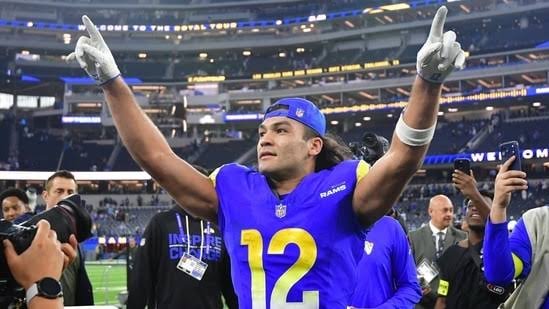
Puka Nacua: Hand Gesture Controversy and the Dance That Sparked Backlash

Los Angeles Rams star wide receiver Puka Nacua has quickly become one of the NFL’s most exciting offensive weapons — but a recent live stream appearance thrust him into an unexpected controversy involving a hand gesture and dance that many people criticized as offensive. This story is about how a seemingly harmless celebration idea turned into a broader debate about awareness, symbolism, and the responsibilities of public figures.
Who Is Puka Nacua?
Before we unpack the controversy, it’s important to understand who Puka Nacua is.
Puka Nacua is a professional American football wide receiver for the Los Angeles Rams in the NFL. Since being drafted, he’s built a reputation as a dynamic playmaker with excellent route-running skills and big-play potential. His rise in the league has made him a beloved figure among Rams fans and fantasy football players alike.
The Live Stream That Started It All
In mid-December 2025, Nacua appeared on a livestream with popular internet personality Adin Ross and streamer Mikyle Rafiq (N3on). The stream involved casual conversation, commentary on football, and a light-hearted discussion about what Nacua’s next touchdown celebration dance should be.
At one point, Ross began suggesting specific movements as part of a dance routine — from mimicking spinning a football to flexing muscles — that Nacua could use after scoring a touchdown. However, one particular part of the routine quickly drew serious public criticism.
What Was the Controversial Hand Gesture?
The most controversial part of the live stream was a gesture Ross called his “Jewish dance” or “Jewish emote.” During the segment, Ross suggested that Nacua should:
-
Stand in a hunched-over stance,
-
Look at the camera, and
-
Rub his hands together.
This gesture — especially when done in a specific way — has been widely interpreted as evoking stereotypes about Jewish people and greed, often connected to antisemitic caricatures popularized in certain online communities.
Critics pointed out that the action mirrored an offensive trope and could perpetuate harmful stereotypes, even though Nacua himself said he didn’t understand its implications at the time.
Why Was the Gesture Viewed as Offensive?
While some viewers might see a simple hand-rubbing movement as nothing more than a celebration idea, many others recognize its problematic context:
-
Association with antisemitic memes: The gesture has been used in online imagery and memes that mock Jewish people by portraying them greedily rubbing their hands together. This association amplifies how such a simple motion can carry harmful meaning.
-
Context of rising concerns about antisemitism: Critics also noted that the controversy unfolded just days after a real-world hate crime in Australia targeting Jewish people, heightening sensitivity around antisemitic issues.
-
Public platform: Nacua is not only an NFL star — he’s a public figure whose actions and gestures can reach millions worldwide, bringing added responsibility to be aware of symbolism and cultural meaning.
Puka Nacua’s Response and Apology
Following the backlash, Nacua took to social media — specifically Instagram — to address the situation. He stated that:
-
He had no idea the gesture carried offensive meanings when he performed it on the livestream.
-
The movement was suggested to him during the live broadcast, and he agreed without understanding its context.
-
He deeply apologized to anyone who was hurt or offended by his actions.
-
He emphasized that he does not support racism, bigotry, or hate against any group of people.
His statement aimed to clarify his intentions, urging people not to misconstrue his participation as endorsement of prejudice.
NFL and Public Reaction
The NFL and the Los Angeles Rams responded to the controversy by condemning all forms of discrimination. Both organizations reiterated their commitment against hate and antisemitism in any form.
Political figures also weighed in. U.S. Representative Eric Swalwell publicly criticized Nacua’s actions — particularly given the broader climate of rising antisemitism — calling for accountability and an apology.
On social media, fans and commentators were divided. Some defended Nacua, arguing he didn’t know the gesture’s implications, while others stressed that public figures should be more culturally aware.
Why This Matters Beyond Football
At first glance, a player working on a touchdown celebration might seem trivial. But this episode shows how symbols and gestures can carry deep cultural and historical meaning, especially in a digital age where content spreads instantly.
For professional athletes and other public personalities, understanding context matters — particularly when interacting with influencers and online trends that may not be widely understood. This controversy highlights:
-
The influence of social media personalities on major sports figures.
-
The need for greater cultural awareness in public behavior.
-
How quickly an innocent idea can escalate into a broader conversation about prejudice and symbolism.
Lessons from the Incident
Here are five key takeaways from the Puka Nacua gesture controversy:
-
Symbols matter: Actions that seem harmless to one person can be offensive in another cultural or historical context.
-
Public figures have responsibility: Athletes in the spotlight are listened to by millions and should consider the implications of their actions.
-
Apology and awareness are critical: When mistakes happen, prompt acknowledgment and education matter.
-
Social media can fuel controversy: Viral clips and commentary can quickly turn an obscure broadcast moment into a national discussion.
-
Fans are paying attention: From political leaders to everyday viewers, public reactions reveal how important these issues are beyond just sports.
FAQs About Puka Nacua’s Gesture and Dance
1. What exactly did Puka Nacua do?
Nacua performed a hand-rubbing gesture suggested during a livestream that many people interpreted as evoking antisemitic stereotypes. He agreed to use it as a potential touchdown celebration without understanding its offensive meaning.
2. Why was the gesture considered offensive?
The gesture is associated with harmful stereotypes about Jewish people and greed, often used in antisemitic imagery, which is why many viewers found it objectionable.
3. Did Puka Nacua apologize?
Yes. Nacua issued a public apology saying he was unaware of the negative connotations and does not endorse any form of racism or hate.
4. What did the NFL say about the incident?
The NFL condemned all discrimination and reiterated its stance against hate speech and harmful conduct.
5. Will this affect Nacua’s career?
As of now, there’s no confirmed disciplinary action from the NFL or Rams beyond the public statements. But the incident has sparked a conversation about cultural awareness for athletes.
Conclusion
The Puka Nacua hand gesture controversy is a reminder that even playful moments can have real-world impact when broadcast to millions. It underscores the importance of understanding cultural context and the influence of symbolism in public life — especially in sports and entertainment.
Nacua’s apology shows a willingness to take responsibility, while the reactions from fans, media, and public figures highlight how social media can rapidly elevate minor moments into major discussions about respect and representation.