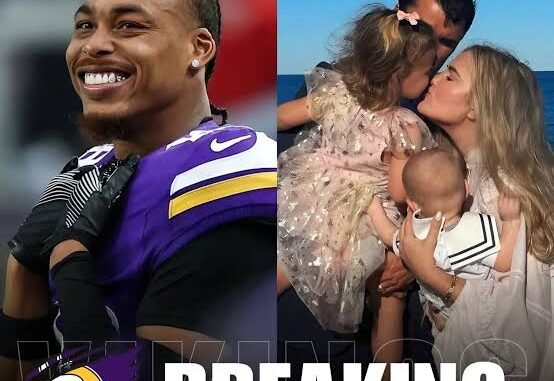
In the aftermath of Charlie Kirk’s tragic killing at Utah Valley University, a viral claim spread across social media: NFL star Justin Jefferson pledged to pay all living and educational expenses for Kirk’s two children. As with many emotionally charged stories, the question arises: is this true, or just another viral misinformation? This article unpacks what we know, what is claimed, and what the facts suggest — and why stories like these catch on so fast.
1. Who Was Charlie Kirk
Charlie Kirk was a conservative political activist, known for founding and leading Turning Point USA. He was outspoken in politics and had drawn both support and criticism for his views. On September 10, 2025, Kirk was shot and killed while speaking outdoors at Utah Valley University.
He left behind a wife, Erika Frantzve Lane Kirk, and two young children: a son (about one year old) and a daughter (about three) at the time of his death.
2. Who Is Justin Jefferson
Justin Jefferson is a wide receiver for the Minnesota Vikings in the NFL. He is notable for his athletic achievements on the field, and he has a significant public presence off the field as well.
He’s not publicly connected to Charlie Kirk by familial or organizational ties (as far as reliable reports indicate), but in recent days, his name has been used in social media claims tied to the tragedy.
3. The Viral Claim: What Is Being Said
Here is a summary of the viral claim:
-
After Charlie Kirk was killed, a social media post states Justin Jefferson “immediately stepped in, pledging to pay all living and educational expenses for Kirk’s two children.”
-
The post also claims that this gesture “eased the burden” on Kirk’s family, and that many people on social media praised Jefferson for his generosity.
-
The claim has been shared by various outlets (many not known for fact-checking rigor), but with little or no citation of official sources.
4. Fact-Checks and Credible Sources
Several fact checkers and reputable news outlets have already examined the claim:
-
Hindustan Times: Examined the claim and found that there is no official confirmation from Justin Jefferson, his representatives, or the Vikings that he made such a pledge.
-
Star Tribune: Reported that the claim is false; the Vikings confirmed that Jefferson has not issued a statement related to paying for the children’s living or educational expenses. Star Tribune
-
ZoomBangla / iNews Bangla: Also concluded that no proof exists to support the viral claims.
-
Economic Times: Noted that while the story has gone viral, it remains unverified.
So far, no credible statement has been made by any party directly involved confirming that Justin Jefferson pledged such support.
5. Analysis: Why the Claim Is Likely False
Given the available evidence, several points suggest the claim is unsubstantiated:
a) Lack of first-party confirmation
There is no statement from Jefferson, his public relations team, or the Minnesota Vikings that indicates he made any such promise. Typically, for high-profile acts of charity or public support, the person or organization acknowledges them or records them. The absence here is telling.
b) Spread of unverified claims
The story appears to have proliferated because of social media shares and posts without sourcing. Users praised the claimed act, and emotions ran high — making it prime material for virality. But emotional appeal is not evidence.
c) Fact-checkers did not find supporting records
Outlets known for investigation (like Star Tribune, Hindustan Times, etc.) found no supporting documentation. If such a pledge were real, especially involving a public figure of Jefferson’s stature, paperwork or official announcements would be expected.
d) Possible confusion with other events
Sometimes, such claims emerge from misunderstandings, mis-quoting, or mixing up separate stories (e.g. someone else offering help, or a general donation, but not from Jefferson). There is no evidence that any donation is underway from Jefferson.
6. Impact of the Rumor
Even though the claim is likely false, the spread of this rumor has impact, both positive and negative.
Positive effects
-
Inspiration and goodwill: The idea of someone stepping up in a crisis resonates. It prompts conversations about generosity, empathy, and community support.
-
Awareness of the tragedy: More people know about Charlie Kirk’s death and its aftermath.
Negative effects
-
Misinformation erosion: When false claims propagate, they erode trust. Readers may become skeptical even of true stories.
-
Emotional manipulation: Such stories can manipulate grief and sentiment for clicks, which is unethical.
-
Potential harm to individuals: If people believe false reports, that could create false expectations or disappointments. It may also put pressure on individuals who are being falsely attributed with acts.
7. What This Tells Us About Social Media & Verifying News
This case is a good example of the modern dynamics of news circulation:
-
Speed vs accuracy: Social media amplifies stories very quickly. Accuracy often comes later.
-
Emotional viral content: Stories of tragedy + a hero or a kind act tend to go viral; they emotionally engage people.
-
The importance of primary sources: Verification usually needs direct statements, official documents, or trusted institutions.
-
Role of fact-checking organizations: Entities like AP, Reuters, etc., serve an important role in separating fact from rumors.
8. Conclusion
So — did Justin Jefferson donate or pledge to pay for Charlie Kirk’s children’s living and educational expenses? Based on all credible information available so far, no. The claim remains unverified; no reliable evidence supports that Jefferson made such a pledge. Multiple respected fact checkers have concluded that the story is false or at least unconfirmed.
That doesn’t change the tragedy of Charlie Kirk’s death, or the reality that his family faces difficult circumstances. But it does remind us to be cautious about what we read, share, or believe online — especially in times of grief or emotional upset.