Introduction
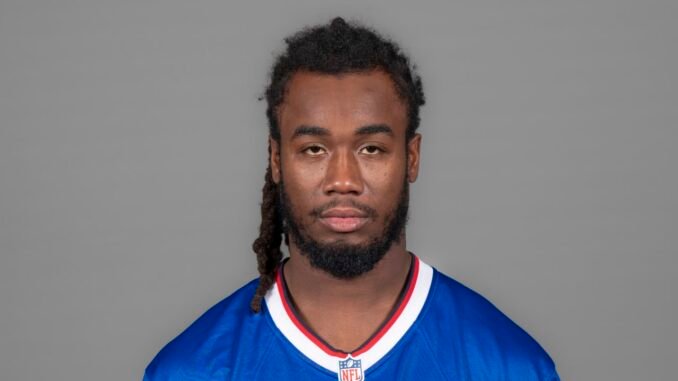
James Cook, the explosive running back for the Buffalo Bills, has become one of the most intriguing players in the NFL—not only for his on-field production but also for his recent contract saga and minor injury hiccups. This article provides comprehensive review of his injury status, updates on his health, the contract extension he recently signed, and what all of this means for the Bills and fantasy football managers alike.
Profile & Background
-
James Cook, drafted in 2022 (2nd round, pick 63) out of the Georgia Bulldogs, stands 5′11″ and 190 lbs.
-
From his rookie season forward, he’s shown strong versatility—both as a rusher and a receiver—earning him a key role in the Bills’ offense.
-
In 2024 he emerged as a Pro Bowl calibre back, setting the stage for the heightened expectations and ensuing contract negotiations.
Injury History & Status
Recent Updates
-
In early September 2025, Cook was limited in practice due to a hamstring injury. The report noted: “Running back James Cook was limited in Wednesday’s practice with a hamstring injury.”
-
In the Week 2 injury report, he was listed as “limited” due to the hamstring, though by Thursday/Friday he had been upgraded to full.
-
Ahead of a Week 3 matchup vs. the Miami Dolphins, Cook was cleared and off the injury report.
Historical Notes & Risk Profile
-
According to fantasy-health trackers, Cook has no major active injuries listed as of 2025, and his injury history is relatively clean (no games missed recorded in recent seasons) when compared to many running backs.
-
That said, one must always be cautious with running backs: durability metrics show a projected 7.4% chance per game of injury and estimate ~1.5 games missed for Cook in 2025.
What This Means
-
Given that the hamstring issue was mild and he was cleared quickly, the immediate risk appears low for missing upcoming games. However, as a high-mileage skill player who performs both as runner and receiver, monitoring week-to-week practice participation remains important.
-
For fantasy football or betting contexts, the note that he was “limited” is a flag—but being off the report by game day is a positive.
-
For the Bills, maintaining Cook’s availability is key: his dual-threat capability provides offensive balance and a dynamic weapon for quarterback Josh Allen.
Contract Situation & Update
Background & Hold-In
-
Cook entered the 2025 season as the final year of his rookie contract without an extension in place. Reports in March 2025 indicated contract talks between the Bills and Cook had stalled.
-
During the offseason he even skipped voluntary OTAs to signal his desire for a new deal.
-
At one point he participated as a full player in minicamp, saying “I mean, why not? I’m here, I’m part of the team,” underscoring he wanted to stay engaged despite the contract uncertainty.
Extension Details
-
In August 2025, the Bills and Cook agreed to a four-year, $48 million contract extension, with $30 million guaranteed.
-
The deal reportedly includes additional escalators tied to snap percentage and playoff participation. For example, a $1 million escalator in 2028 if Cook participates in 45% or more of offensive snaps and the team makes the playoffs.
-
Some detailed breakdowns suggest the deal may be structured as a three-year real commitment at ~$30.1 million based on potential dead-cap costs if cut early.
-
The extension effectively locks Cook in through 2029 under reasonable assumptions, securing his services during his prime years.
Significance & Context
-
With this deal, Cook becomes one of the higher-paid backs in the NFL, reflecting his value not only as a rusher but also as a receiving threat.
-
The extension ends the contract limbo and likely allows him to focus fully on performance rather than negotiations.
-
For the Bills’ front office, securing Cook means protecting a key offensive piece, allowing planning around him rather than speculative replacement.
-
For fantasy players and analysts, the contract gives some confirmatory signal: the team is committed to giving him opportunities, which may translate into consistent usage.
Impact on Buffalo Bills Offense
-
Cook’s multi-dimensional role (rushing + receiving) adds flexibility to the Bills’ offense. He is a weapon in both traditional downhill runs and as a check-down or screen target in the passing game.
-
With the contract in place and injury risk relatively managed, Coach Sean McDermott and the Bills can schematically rely on Cook as a core component rather than rotate him out of uncertainty.
-
Cook’s presence opens up opportunities for playmaking and helps keep defenses honest. When defenders must respect his ability to catch the ball out of the backfield, it creates running lanes for him and others.
-
From a team morale and culture standpoint, resolving his contract likely lifts a potential distraction and aligns the roster’s focus entirely on performance.
Fantasy Football & Betting Considerations
-
Given Cook’s cleared injury status and new contract, fantasy managers should feel more confident in his week-to-week floor and ceiling relative to many backs who face usage uncertainty.
-
The hamstring tweak is a reminder that backs can get nicked up quickly; monitoring early-week practice reports remains vital.
-
The contract may also increase his “touch economy” — expectation for more carries and targets to justify the investment. That said, the Bills may still manage his workload to avoid wear-and-tear.
-
For betting markets (e.g., rushing yard props, total touchdowns), Cook’s cleared status and role stability give him an upward tilt, though match-up and game flow still matter.
Key Takeaways & What to Watch
-
Health: Cook is currently healthy and off the injury report after a minor hamstring issue. But running backs carry inherent injury risk—monitor practices.
-
Contract: The four-year, $48 million extension locks Cook in and aligns incentives for both player and team. He is now a foundational offensive piece for Buffalo.
-
Usage: With contract security, expect the Bills to lean on Cook more heavily — both in the run game and passing game. His dual-threat nature enhances his upside.
-
Value: For the team, Cook’s extension mitigates uncertainty. For fantasy/ betting, he is more stable than many backs—though still subject to game-script and workload variables.
-
Next Steps: Keep tabs on weekly practice participation, any signs of lingering injury or limitation, and how the Bills deploy him — especially in high-leverage situations.
Conclusion
James Cook’s recent trajectory offers a compelling combination of productivity, stability, and optimism. A once-uncertain contract situation is resolved, an injury concern was addressed quickly, and his role in the Buffalo offense appears secure. For the Bills, this means their offensive backfield is anchored. For fans, analysts, and fantasy managers, Cook presents as a high-value asset with above-average upside and reduced downside risk compared to many running backs in a volatile position.