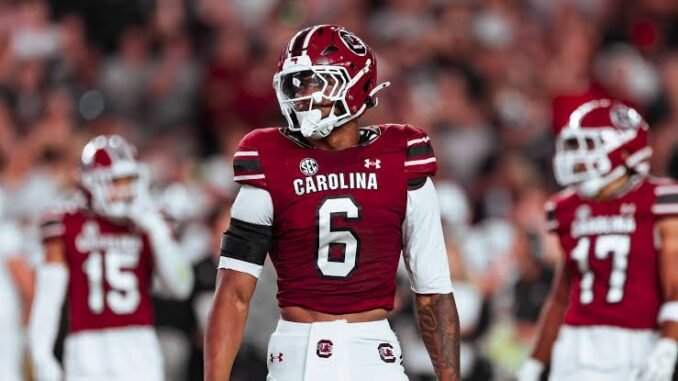
Dylan Stewart has quickly emerged as one of the most compelling storylines in college football’s new Name, Image, and Likeness (NIL) era. From being a high-profile high school recruit to becoming one of the SEC’s elite pass rushers, Stewart’s journey underscores how NIL negotiations and the transfer portal continue to reshape the sport.
From High School Standout to Five-Star Recruit
Stewart’s rise began at Friendship Collegiate Academy in Washington, D.C., where he dominated as a defensive end, including recording big sack numbers as a junior. A consensus five-star recruit, Stewart was among the top EDGE prospects nationally in the 2024 class, attracting offers from powerhouse programs like Georgia, Ohio State, Miami, Maryland, and ultimately committing to South Carolina.
According to recruiting services like 247Sports, Stewart’s elite status out of high school made him one of the most sought-after defensive players in the nation, highlighting his future potential long before he set foot on a college campus.
College Football Impact and Breakout Freshman Year
Stewart wasted no time making an impact. In his freshman season at South Carolina, he quickly became one of the Gamecocks’ most disruptive defensive players with double-digit tackles for loss and multiple sacks. His performance earned All-Freshman honors and positioned him among the nation’s top pass rushers.
His explosive playmaking and consistent pressure on opposing quarterbacks fueled discussions about his future, both on and off the field.
NIL Deal That Changed the Narrative
In the era of NIL, top college players can earn significant compensation while still in school — and Stewart exemplifies this shift. Rather than entering the transfer portal, Stewart chose to stay at South Carolina after signing a major NIL deal with the school’s official collective, The Garnet Trust.
This agreement is reported to be in the $1 million to $1.5 million range, making Stewart one of the highest-compensated non-quarterbacks in college football.
Stewart’s decision to stay was influenced by more than money — he emphasized loyalty to his team and belief in South Carolina’s competitive trajectory. Despite significant interest from other programs, he remained committed to the Gamecocks’ vision.
Transfer Portal Speculation and What It Means
With the transfer portal now a major force in college football recruiting, many top athletes use it to explore new opportunities. The portal system allows players to signal their intent to transfer and receive immediate attention from other programs.
In Stewart’s case, persistent rumors suggested he could have leveraged his elite play for even more lucrative offers had he entered the portal. But his decision to stay reflects a growing trend where athletes balance NIL opportunities with team fit, coaching relationships, and long-term goals — including NFL aspirations.
247Sports View and Broader Recruiting Impact
Outlets like 247Sports have tracked Stewart’s recruitment and college progression, noting his combination of elite athletic traits, production, and market value in the NIL landscape. While Stewart’s original recruiting hype came from his high school dominance and five-star status, his college performance has justified that billing and reinforced his high valuation in the NIL marketplace.
His profile is now a prime example of how top recruits can seamlessly transition from high school stardom to college standout and become centerpiece figures in NIL negotiations.
Conclusion: A New Paradigm for College Stars
Dylan Stewart’s journey from top high school recruit to NIL-enabled cornerstone player for South Carolina highlights the evolving dynamics of college football. By choosing to stay put and sign a significant NIL deal rather than test the transfer portal, Stewart sent a powerful message about loyalty, stability, and strategic career planning.
As the game continues to evolve with NIL and portal shifts, Stewart stands as a leading example of how players can maximize their value while also contributing to team continuity — a blueprint that many future prospects and programs will likely study closely.