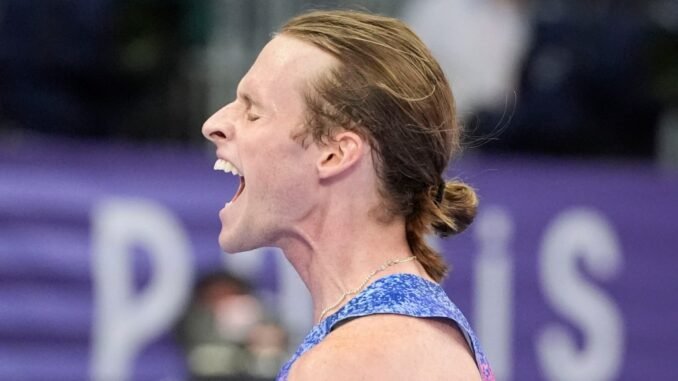
Cole Hocker: Disqualified in the 1500m at the World Athletics Championships
Cole Hocker’s name has become a flashpoint in World Athletics debate after a disqualification in the semi-finals of the men’s 1500m at the 2025 World Athletics Championships. The decision, the rule in question, the implications for the sport and for Hocker himself — all combine into a complex story of rules, sportmanship, and the fine line between competitive aggression and rule violation.
Background: Who Is Cole Hocker?
Cole Hocker, born June 6, 2001 in Indianapolis, is an American distance runner specializing in middle distances, especially the 1500m.
He shot to international prominence when he won the gold medal in the men’s 1500m at the 2024 Olympics in Paris. Not only did Hocker take gold, but he also set a new Olympic record of 3:27.65.
Hocker’s rise has been underpinned by strong performances at both national and international levels. He holds multiple USA titles, impressive personal bests, and has shown strong tactical acumen and finishing speed. Wikipedia
The Incident: What Happened in the Semi-Finals
On September 15, 2025, during the semi-finals of the men’s 1500m at the World Athletics Championships, Cole Hocker was disqualified. The reason was a “jostling” violation — specifically rule TR17.1.2[J] in the World Athletics rulebook.
Here’s a breakdown of how the events occurred:
-
Hocker was running in the second of the two semi-final heats.
-
As the race progressed into the last lap, Hocker found himself boxed in — behind Germany’s Robert Farken and another athlete, with only the top six finishers guaranteed places in the final.
-
In the final 50 to 100 meters, Hocker made a move to overtake. In doing so, contact was made: Hocker used his left arm, pressing into Farken’s shoulder/body, and held his arm across Farken’s body during the surge.
-
Hocker crossed the line in a place that would have qualified him automatically, finishing among the top six. Farken, because of the contact and the rules violation, initially was excluded from advancing.
Disqualification and Rule TR17.1.2[J]
After the semi-final, Germany filed an appeal. The appeal argued that Hocker’s move constituted unfair interference under the referenced “jostling” rule. World Athletics adjudicated the appeal and disqualified Hocker. Robert Farken was advanced to the final, and another athlete — Tshepo Tshite of South Africa — was moved into the final’s top-six (to fill the vacated qualifying place).
Rule TR17.1.2[J] – “jostling” is defined by World Athletics as:
Physical contact on one or more occasions with another athlete or athletes that results in an unfair advantage or causes injury or harm to them or, consequently, to another athlete or athletes.
In this case, officials determined that the contact was enough to constitute a violation: that Hocker gained an unfair advantage, even though he finished in a qualifying position.
Reactions: From Hocker, USA, and Observers
-
Cole Hocker stated that he was trying to finish in the top six, as everyone was. He said his move wasn’t intended to impede anyone “intentionally.” He also reflected that perhaps he should have positioned himself better before the last lap instead of waiting, in hindsight.
-
Team USA — through USA Track & Field — has indicated that they intend to appeal the decision. They believe the ruling may have been too strict, or that the contact did not meet the threshold for disqualification.
-
Observers, commentators and analysts have been split. Some argue that any contact in a tightly packed race is inevitable, especially in high-stakes rounds like semi-finals. Others say that athletes must respect space, particularly in overtaking situations, and that rules exist to maintain fairness. BBC commentator and former athlete Steve Cram said Hocker “panicked” in the final straight, using his elbow, and that the rules had to be upheld.
Implications for Sport and for Cole Hocker
-
Sporting fairness and precedent
Disqualifications for jostling are not new in athletics, but they are relatively rare in high-profile semi-finals or finals — especially involving star athletes. The decision underscores that World Athletics is enforcing rules strictly, to ensure fairness. It may set precedent for similar cases in tightly contested races, particularly in middle distance events. -
Race tactics and athlete decision-making
The incident highlights the importance of positioning during races: being boxed in, waiting too long to move, or trying to force through tight gaps can lead to violations. Athletes and coaches may need to adjust tactics, thinking ahead about space and movement, especially in championship events where elimination is on the line. -
Impact on Hocker’s Momentum
For Cole Hocker, this is a setback. Having come off an Olympic gold and a rapidly rising profile, this disqualification is a blow. It denies him a chance at a World Championship final in an event he is now seen as a serious contender to win. Reputation, public perception, and mental side may all be affected. -
Rule clarity and athlete education
The incident may prompt calls for clearer communication of the rules, particularly how “jostling” is judged: what level of contact triggers DQ, how much discretion judges have, and how appeals are handled. It also suggests that athletes must have a full understanding of rule TR17.1.2[J] and similar clauses to avoid inadvertent violations.
Broader Context: What Does This Mean in the Landscape of 1500m Running?
Middle-distance running, and the 1500m in particular, has always been as much about strategy as speed. Championship 1500m races are rarely “all out” from the gun; they involve positioning, surges, sprint kick finishes, and sometimes physical jockeying for place.
Athletes like Jakob Ingebrigtsen, Josh Kerr, Timothy Cheruiyot — all have had to manage the chaos of semi-finals, where the pressure is high, gaps are narrow, fatigue is present, and any misstep can end hopes. Hocker’s Olympic win came partially due to his finishing speed, but also to situational awareness. But in this case, the awareness came too late or was constrained — boxed in, the window for overtaking was minimal, and the move he made was judged to cross the line of permissible contact.
Also, this kind of judgement reflects what the rules are meant to enforce: not only speed and endurance, but fairness and safety. The rules guard against unfair advantage or interference — ensuring that the outcome is determined by athletic performance and not by impediment or risk to others.
The Appeal Path
Team USA’s intention to appeal is an important part of this story:
-
Appeals are allowed under the World Athletics system when a federation believes the ruling was incorrect. The appeal will need to show that either the contact did not rise to the level of unfair advantage, or that the violation rules were misapplied.
-
It will also depend on video evidence, the perspectives of multiple judges, and perhaps whether precedents exist (past cases of similar contact and their outcomes).
-
The result of the appeal could reinstate Hocker or could simply affirm the disqualification.
What This Decision Means for the Final
With Hocker out of the final, several athletes benefit in terms of entry:
-
Robert Farken (Germany) is advanced to the final in place of Hocker.
-
Tshepo Tshite (South Africa) gets moved into a qualifying top-six spot.
-
The dynamics of the final change: a top contender is out, possibly opening the door for others to medal. Athletes who might have expected to battle with Hocker must now reassess their strategies.
Takeaway Lessons & Reflections
-
Margin for error is small. At high levels of competition, moving too aggressively, even a slight miscalculation, can lead to disqualification.
-
Tactical awareness matters. Positioning, awareness of other runners, anticipating blocks or gaps, and choosing when to surge or when to stay patient are all crucial.
-
Rules are enforced. Athletes should not assume that big names or past achievements will give them leeway. Even Olympic champions can be penalized.
-
The psychology of competition. For Hocker, and others, balancing ambition, urgency, and rule compliance under pressure is a fine art.
Conclusion
Cole Hocker’s disqualification in the 1500m semi-finals at the World Athletics Championships is more than just a news item; it is a moment that underscores the tension between competitive drive and the enforcement of rules designed to ensure fairness.
While Hocker’s Olympic triumph in 2024 established him among the elite, this incident illustrates how in championship racing, success depends not just on raw speed or strength, but also on judgment, positioning, and respect for regulations.
Whether his appeal succeeds or not, the decision will likely have ripple effects: for how athletes race, how coaches teach the rules, and how rules are enforced in the future. In the world of 1500m — where seconds (and fractions thereof) are everything — the margin for error is nearly invisible.