Introduction
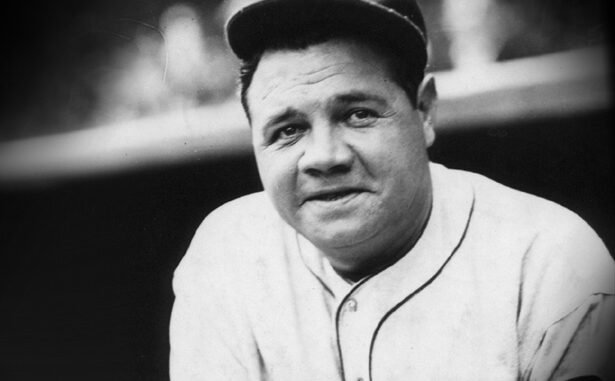
Babe Ruth (George Herman Ruth Jr.) remains one of the greatest legends in baseball history — a powerful slugger, a larger-than-life personality, and an enduring cultural icon. But beyond the home runs and records, his personal life and legacy are full of stories just as compelling. In this article, we explore the life of Babe Ruth: his marriages, children, final game, and financial standing.
Wife(s) — Who Were Babe Ruth’s Spouses
-
Ruth’s first wife was Helen Woodford. The two married on October 17, 1914, when Ruth was a teenager.
-
Helen and Babe Woodford adopted a daughter named Dorothy Ruth Pirone in 1921.
-
However, Ruth’s repeated infidelities and neglect led to their separation around 1925.
-
In January 1929, Helen died tragically in a house fire.
-
A few months later — on April 17, 1929 — Ruth married Claire Merritt Hodgson, a model and actress. Through this marriage, he adopted Claire’s daughter, Julia Ruth Steven.
-
This second marriage to Claire remained until Ruth’s death in 1948.
So, in short: Ruth had two wives in his lifetime — Helen Woodford and Claire Hodgson.
Did Babe Ruth Have Children?
Yes — Babe Ruth had two daughters, though their stories are somewhat complicated:
-
Dorothy Ruth Pirone — officially adopted by Ruth and Helen in 1921. However, decades later Dorothy claimed she was actually Ruth’s biological daughter by a mistress (Juanita Jennings), a fact Juanita admitted in 1980.
-
Julia Ruth Stevens — born in 1916 to Claire Hodgson and her then-husband, and adopted by Babe Ruth after his 1929 marriage to Claire.
So yes — though adopted (and in one case with complicated paternity), Ruth did leave behind two daughters.
Additional context: Dorothy and Julia had different childhood experiences. Dorothy’s upbringing was reportedly turbulent: after Ruth and Helen separated, Dorothy spent many years away from him, and after Helen’s death she joined Ruth and Claire only later. Julia, by contrast, often recalled happier memories, including travel, dancing with her father, and spending time together as a family.
Last Game — When and How Babe Ruth Ended His Career
-
In 1935, after a long career with the New York Yankees (1920–1934) and earlier with Boston Red Sox (1914–1919), Babe Ruth moved to the Boston Braves for a final season.
-
On May 25, 1935, at age 40, Ruth produced a remarkable performance against the Pittsburgh Pirates at Forbes Field — going 4-for-4 with three home runs, including his 714ᵗʰ and final career homer (the first fair ball ever to clear the roof at Forbes Field).
-
Five days later, on May 30, 1935, Ruth played his final major league game — against the Philadelphia Phillies at Baker Bowl. In his final at-bat he grounded out. In left field, he misplayed a fly ball, and in the bottom half of the inning, he left the field and never returned.
-
Shortly afterward (June 2, 1935) he formally announced his retirement.
Thus, Ruth’s last game — and effectively the end of one of the most legendary careers in baseball — came quietly, without a grand farewell, just days after a fitting final display of power.
Net Worth — What Was Babe Ruth’s Financial Standing
-
At the time of his death in 1948, Babe Ruth’s net worth was estimated to be US$ 800,000.
-
His wealth came from his lavish baseball career — salaries during peak years reportedly reached US$ 80,000 per season in 1930–31 (a very high amount for that era).
-
Apart from salary, Ruth also earned from endorsements and various commercial deals (with companies like Spalding, Louisville Slugger, and others).
-
Some sources suggest that when adjusted for inflation and modern equivalents, his effective earnings and career income would be valued much higher than the nominal 1948 figure.
In short — while US$ 800,000 may seem modest by today’s superstar standards, in his time it represented considerable wealth, and his fame and endorsements made him one of the most financially successful athletes of the early 20th century.
Conclusion — The Legacy Beyond the Numbers
Babe Ruth’s life was as dramatic off the field as it was historic on the field. Between complex personal relationships, a late-career decline and a humble final game, and a financial legacy modest by modern celebrity-athlete standards, Ruth remains fascinating not just for his records but for his humanity.
He married twice, raised (or adopted) two daughters under unusual circumstances, ended his storied career in 1935 after a final memorable home-run display, and left behind a net worth that, adjusted for time, reflects a successful — if not extravagant — athlete of his era.
His story reminds us: behind every legend is a real human being, with triumphs, mistakes, complexities, and — ultimately — a legacy.