Introduction
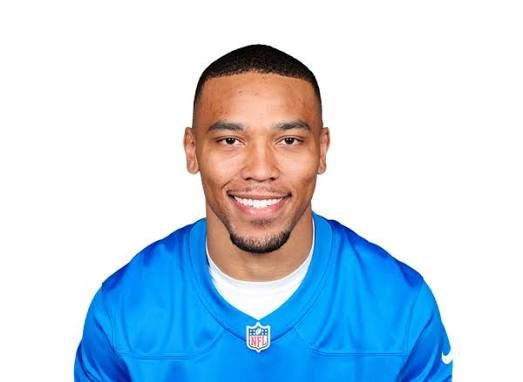
Amon Ra St. Brown is one of the breakout stars in the NFL. Selected in the fourth round of the 2021 draft by the Detroit Lions, he quickly established himself as a top wide receiver.
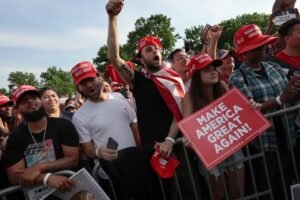
Given his rising public profile, fans and commentators often ask: What are his political leanings? Is he a Republican or Democrat? Does he support Donald Trump?
In this article we’ll explore what the publicly available record (or lack thereof) reveals, review incidents that some have interpreted as political signals, and examine why many athletes remain silent or neutral on partisan politics.
Amon Ra St. Brown: Background & Public Persona
Before diving into the politics question, it’s helpful to recap the background of St. Brown — his upbringing, career, and public image.
Early life & heritage
-
St. Brown was born October 24, 1999 in Anaheim Hills, California.
-
He has dual American and German citizenship through his mother (originally from Germany) and his father.
-
His name “Amon-Ra” derives from Egyptian mythology (Amun-Ra being the sun god).
-
He attended Mater Dei High School and later played college football at the University of Southern California (USC).
NFL career & public profile
-
Drafted by Detroit Lions in 2021 (4th round, pick 112).
-
Has emerged as a top wide receiver, with Pro Bowl selections and All-Pro honours.
-
Off the field, St. Brown is known for his strong work ethic, multilingual skills (English, German, French) and his role as a community ambassador for a Christian healthcare non-profit.
What this suggests for political signalling
Given St. Brown’s heritage, public image, and charitable activity, he gives the impression of someone focused on sport, team success and community rather than overt political campaigning. That doesn’t mean he has no views — but it means that if he does, he keeps them private or low-key.
Does Amon Ra St. Brown support Donald Trump?
This is one of the more specific questions asked by fans. Here’s what the public record shows — and notably, what it does not show.
What isn’t in the public record
-
There is no credible public donation record (that we could find) showing St. Brown contributing to Trump campaigns or explicitly supporting Trump-branded political efforts.
-
He has not publicly declared that he is a Trump supporter (e.g., via interview, social media post) that is widely cited.
-
His social media activity and public media appearances focus on football, personal brand and heritage — not partisan politics.
What is in the public record (minor or indirect signals)
-
One article reports that in a recent game, St. Brown celebrated a touchdown by using a move coined the “Trump Dance” while pointing to a box in which President Trump was reportedly watching.
-
Interpretation caution: The use of that celebration is ambiguous: it could be playful, symbolic, or purely celebratory — not necessarily a political endorsement.
-
-
His charitable and ambassadorial work (e.g., with a Christian healthcare non-profit) might suggest certain value-orientations, but those do not map cleanly to a party affiliation.
My assessment
Given the evidence:
-
It is unlikely that St. Brown has publicly declared himself a Trump supporter in a way that would stand out publicly.
-
It is also not possible from publicly verified sources to categorically say he aligns with the Republican Party (or the Democratic Party).
-
Thus, the most accurate conclusion: He has not publicly aligned himself explicitly with Trump or declared a clear partisan affiliation.
Is he a Republican or Democrat?
This is the broader question of party affiliation. Here’s how to think about it for St. Brown.
Why party affiliation might be unknown
-
Many professional athletes choose to keep their political views private to avoid polarising fans, maintain broad appeal, or focus on sport rather than politics.
-
Unless an athlete personally gives a public statement, races for office, or makes sizeable political donations tied to a party, party affiliation may not surface.
-
Donor records, if present, may require deep investigation; absence of evidence is not evidence of absence—but in public discourse, what isn’t said often matters.
What the available info shows
-
I found no reliable source that lists St. Brown as a donor to a partisan political committee or party.
-
No major interview or public statement appears to frame him as a Republican or Democratic activist.
-
His public persona is more about sport performance, family story, heritage and less about politics.
Conclusion on party affiliation
Given the above, the prudent conclusion is: His party affiliation is either private or not publicly expressed, and there is no verified public evidence that he identifies formally as Republican or Democrat.
Why this matters for fans and media
Understanding whether a prominent athlete leans toward one party or supports certain political figures can shape fan perception, endorsing potential, brand partnerships, and media narratives. Here are a few reasons this question arises and why the answer (or non-answer) has significance.
-
Brand risk and sponsorships: Brands often consider an athlete’s public behaviour, including political alignment, when negotiating endorsements. If an athlete publicly supports a controversial figure, it may affect brand strategy.
-
Fan base reactions: In the U.S., sports and politics often intersect. Some fans prefer public figures who share their ideology; others prefer athletes avoid politics altogether.
-
Media narratives: When an athlete does take a political stance, it often becomes a story. When they don’t, the speculation itself becomes part of the narrative (e.g., “Why isn’t he speaking up?”).
-
Social influence & role models: High-profile athletes influence youth and communities; their choice to speak out (or stay silent) on political issues can have ripple effects.
-
Athlete activism vs. neutrality: There is ongoing debate in sports media about whether athletes should use their platform for political or social advocacy. St. Brown’s lack of a public political label may reflect a conscious choice around this debate.
What the “Trump Dance” incident doesn’t prove
As mentioned earlier, the one public incident that ties St. Brown to Donald Trump by association – the touchdown celebration referenced in one article – merits deeper scrutiny. Here’s what it doesn’t automatically establish:
-
It does not prove he endorses Trump’s political platform. A dance or gesture in a game could be about crowd engagement or topic of pop culture.
-
It does not prove he is a registered Republican or votes Republican.
-
It does not prove he campaigns for Trump or finances Trump-related causes.
Therefore, while the incident is interesting, it remains a weak piece of evidence for any strong claim about his politics.
Why many athletes remain politically ambiguous
Using St. Brown as a case study, here are reasons why a successful athlete might refrain from declaring a party affiliation or high-profile political support:
-
Maintain broad fan base: By staying non-partisan publicly, athletes avoid alienating half of the potential fan base.
-
Focus on performance & team: Many view their identity primarily as athlete and teammate rather than political actor.
-
Brand/endorsement considerations: Brands may prefer athletes who don’t stir political controversy.
-
Privacy & personal choice: Athletes may feel their personal political views are their own business and choose not to publicise them.
-
Risk of backlash or distraction: Aligning with a political figure or party can draw media scrutiny, distract from sports, or invite negative public reaction.
FAQs
Q1: Has Amon Ra St. Brown ever publicly said “I support Donald Trump”?
A1: Not that any reputable record or major media source has documented. The celebration incident linking him to a “Trump Dance” is indirect and not a public endorsement.
Q2: Is there any record of Amon Ra St. Brown donating to a political party?
A2: I could not locate a credible public donation record showing him donating to a specific party or candidate publicly.
Q3: Has he ever declared himself a Republican or a Democrat?
A3: No clear public declaration appears in the available sources. His party affiliation appears to be private or unclaimed in major media coverage.
Q4: Could he be a private supporter of one party but choose not to publicise it?
A4: Yes — many public figures have personal political views that they choose not to make public. Without explicit evidence, we cannot confirm.
Q5: Why does this question about his politics get asked so often?
A5: Because he is a high-profile athlete, and fans/media often look for cues about public figures’ political views. Also, the “Trump Dance” incident created speculation that tied him to political themes.
Conclusion
In summary:
-
Amon Ra St. Brown is a prominent NFL wide receiver whose public persona is built around his sport, performance and heritage.
-
The publicly available record does not show a clear, explicit statement of affiliation with the Republican or Democratic Party, nor a declared endorsement of Donald Trump.
-
Therefore, statements like “He is a Republican” or “He supports Trump” cannot be verified and should be treated with caution.
-
If you encounter claims about his political alignment, they likely stem from inference rather than direct public evidence.