Introduction
Veteran NFL quarterback Aaron Rodgers exited his recent game with a concerning wrist injury — sparking questions about how serious it is and what it could mean for his availability. Here’s a deep dive into what happened, the diagnosis, and what’s next for Rodgers.
What Happened to Aaron Rodgers?
-
The Incident
-
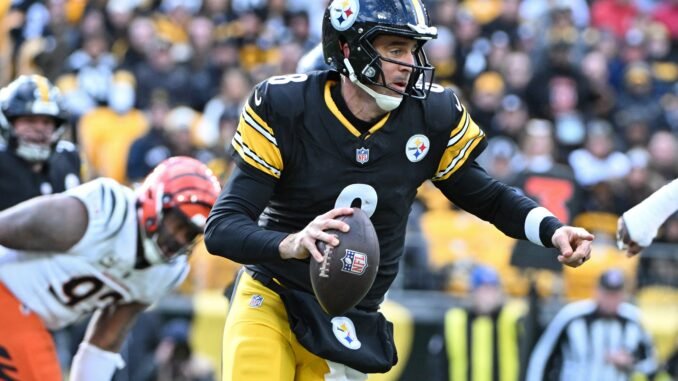
During the Pittsburgh Steelers’ Week 11 matchup against the Cincinnati Bengals, Rodgers took a hard hit late in the first half.
-
He appeared to land on his left hand and wrist after throwing the ball away, grabbing at the area in visible discomfort.
-
Despite the pain, he attempted another play after a timeout, but then headed to the locker room at halftime and did not return.
-
-
Initial Diagnosis
-
According to ESPN, the first concern was a “slight break” in his left (non-throwing) wrist.
-
X-rays taken at the stadium reportedly revealed a small fracture.
-
The Steelers confirmed he would be evaluated further on Monday to assess the full extent of the injury.
-
Is Aaron Rodgers Seriously Hurt?
-
Though the break is described as “slight,” any fracture is a serious concern, especially for a quarterback.
-
Because it is his non-throwing wrist, the injury is less likely to directly impair his passing mechanics — but it could still affect his grip, ball handling, and ability to take snaps.
-
Coach Mike Tomlin expressed uncertainty after the game, saying he didn’t know if Rodgers could have continued playing, and that more information would come after further tests.
-
Rodgers is reportedly optimistic, and sources suggest he’s “telling people he’ll be back soon.”
Rodgers’ Injury History: Context Matters
-
This is not the first time Rodgers has played through or suffered a hand injury. In 2022, he revealed he’d been playing with a broken right thumb since Week 5.
-
He has also had other significant injuries in his career, including two torn Achilles tendons and multiple collarbone issues.
-
That track record suggests he is experienced in playing through pain — but also that his body has taken a beating over many seasons.
What’s Next for Rodgers & the Steelers
-
Medical Evaluation
-
Rodgers will undergo more diagnostic tests (beyond the initial X-rays) to determine how bad the fracture really is, and if there’s any ligament damage or deeper structural issues.
-
Based on that, the Steelers’ medical team will decide his treatment plan, possibly including rest, immobilization, or protective bracing.
-
-
Return Timeline
-
There’s no confirmed timeline for his return yet. With a “slight break,” recovery could be relatively quick, but it depends on how cleanly the bone heals and whether he needs further intervention.
-
Rodgers himself has expressed confidence, but the team will likely err on the side of caution given his value and the risk of aggravation.
-
-
Backup Plan
-
In his absence, Mason Rudolph — who replaced him mid-game — is expected to take over at quarterback.
-
The Steelers’ upcoming schedule and playoff hopes could heavily depend on how Rodgers recovers and how well Rudolph performs.
-
Why This Injury Matters
-
Leadership Impact: As a veteran and leader, Rodgers’ presence on the field is crucial for Pittsburgh. His injury could affect team morale and offensive cohesion.
-
Playoff Implications: The Steelers are in a competitive stretch; losing or limiting Rodgers could shift their postseason trajectory.
-
Long-Term Considerations: At 41 years old, Rodgers isn’t just dealing with a short-term injury — the body of a veteran QB may take longer to heal, and recurring issues could influence his future decisions (including retirement).
Conclusion
Aaron Rodgers’ wrist/hand injury is a significant concern, but early reports suggest it may not be catastrophic — with a “slight break” being the leading diagnosis so far. While his non-throwing wrist is injured (which is less debilitating for a quarterback than a throwing-hand injury), the fracture still raises questions about his grip, snap handling, and long-term health.
With further tests scheduled, the Steelers and Rodgers will closely monitor his recovery. His experience and toughness are on his side, but how quickly he can return — and at what capacity — remains uncertain. For Pittsburgh, the key will be managing his rehabilitation while ensuring their offense remains effective, whether Rodgers is on the field or not.