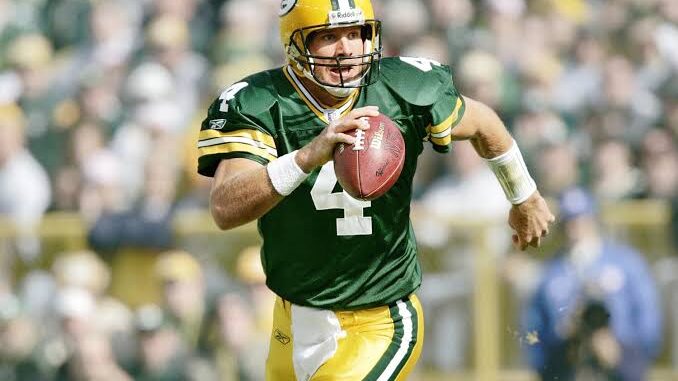
Brett Favre: Parkinson | Concussions | Video | Parkinson Disease

Former NFL quarterback Brett Favre has been open about his battle with Parkinson’s disease since revealing his diagnosis publicly in September 2024. The Pro Football Hall of Famer made the announcement while testifying before the U.S. House Ways and Means Committee, where he was discussing a separate Mississippi welfare-funds controversy.
Favre’s diagnosis immediately renewed discussion about the long-term health consequences of football, particularly because of his extensive history of head injuries and concussions during a 20-season NFL career.
In 2026, Favre has continued to speak publicly about his condition. He has emphasized that he has not given up hope, while explaining that stiffness and rigidity have become more noticeable than shaking.
Brett Favre Parkinson diagnosis
Brett Favre revealed that he had been diagnosed with Parkinson’s disease in January 2024 after consulting multiple doctors. He publicly disclosed the diagnosis on September 24, 2024, during testimony before Congress.
Favre explained that the diagnosis made his investment in a company developing a potential concussion treatment particularly personal. He said he had hoped the treatment could help other athletes dealing with the effects of head injuries.
His announcement attracted significant attention because Parkinson’s is a progressive neurological disorder that can affect movement, balance, speech and other functions. There is currently no cure, although treatments can help manage symptoms.
When was Brett Favre diagnosed with Parkinson’s disease?
Favre said he was diagnosed with Parkinson’s disease in January 2024.
He had reportedly consulted five doctors before receiving the diagnosis. The former Packers quarterback later discussed how difficult the news was for him and his family.
The diagnosis became public several months later when Favre testified before Congress.
Brett Favre and concussions
Concussions have been a major part of the conversation surrounding Favre’s Parkinson’s diagnosis.
During his NFL career, Favre played through an era when concussion awareness, diagnosis and return-to-play protocols were very different from today’s standards.
In a previous interview, Favre said he had officially been diagnosed with only a small number of concussions but believed he may have experienced hundreds or even thousands of episodes involving symptoms such as ringing in his ears and seeing stars.
Those comments became especially significant after his Parkinson’s diagnosis.
However, it is important not to state that Favre’s concussions definitively caused his Parkinson’s disease. Researchers have found associations between traumatic brain injuries and increased risk of neurological conditions, but an individual’s diagnosis cannot automatically be attributed to a specific injury.
Did Brett Favre’s concussions cause Parkinson’s disease?
There is no publicly established proof that Brett Favre’s concussions directly caused his Parkinson’s disease.
Favre himself has discussed his extensive head trauma and the possible connection. His history has also contributed to broader conversations about how repeated head injuries can affect former football players later in life.
Research has found an association between concussion and Parkinson’s risk. One study cited in reporting on Favre’s diagnosis found that even one concussion was associated with an increased risk of developing Parkinson’s disease.
That does not mean every person who suffers a concussion will develop Parkinson’s. Parkinson’s disease has multiple potential risk factors, and scientists continue to study the roles played by genetics, aging, environmental exposures and traumatic brain injury.
Brett Favre Parkinson symptoms
Favre has provided several updates about how Parkinson’s has affected him.
In a January 2026 update, he said that he experiences very little shaking, with tremors more likely to appear when he is fatigued, particularly later in the day.
He said that rigidity and stiffness have been more significant symptoms for him. Favre also said his cognitive memory was okay at that point.
The symptoms experienced by one person with Parkinson’s can differ substantially from those experienced by another. Therefore, Favre’s symptoms should not be viewed as representative of every Parkinson’s patient.
Brett Favre Parkinson video
Favre’s Parkinson’s diagnosis was captured in widely circulated video coverage from his 2024 congressional testimony.
During the hearing, he discussed his diagnosis while also explaining his personal connection to concussion research.
ESPN published video coverage of Favre revealing his Parkinson’s diagnosis during the hearing.
Watch ESPN’s video coverage of Brett Favre’s Parkinson’s diagnosis
Video clips from the hearing subsequently spread across social media, bringing additional attention to Favre’s health.
Brett Favre’s latest Parkinson update in 2026
Favre provided another significant health update in January 2026 through his 4th and Favre podcast.
Some reports interpreted his comments as meaning that he had lost hope because he acknowledged that there is currently no cure and said he was not expecting a cure immediately.
Favre later pushed back strongly against that interpretation.
He told fans that he had not given up hope and said he intended to continue fighting the disease. He also expressed gratitude for prayers and support.
Favre said his condition had progressed somewhat faster than he had hoped, but he remained thankful and optimistic.
Has Brett Favre given up hope?
No.
Favre specifically rejected reports suggesting that he had given up hope.
Following the January 2026 discussion about his health, he said that he was still fighting and hoped that researchers would eventually find a cure.
His comments demonstrate an important distinction: acknowledging that Parkinson’s currently has no cure is not the same as giving up hope.
Favre has continued to speak publicly about his condition and encourage attention toward Parkinson’s research.
Brett Favre and football head injuries
Favre’s case has renewed attention on the long-term consequences of playing professional football.
He spent most of his legendary career with the Green Bay Packers, playing 20 NFL seasons and becoming one of the most durable quarterbacks in league history.
His style was also physically demanding. Favre regularly absorbed hits while extending plays and remaining on the field.
He played in 321 consecutive games, an NFL record for quarterbacks, making his career longevity particularly remarkable.
However, that durability also meant exposure to repeated impacts over many years.
Favre has acknowledged that he did not always recognize or report what would now be considered concussion symptoms.
Parkinson’s disease and former athletes
Favre is not the only major sports figure to have dealt publicly with Parkinson’s disease.
His diagnosis has contributed to a broader conversation about neurological health among former athletes. Researchers continue to examine whether repeated head trauma can increase the risk of neurological disorders later in life.
It is important, however, to distinguish Parkinson’s disease from chronic traumatic encephalopathy (CTE).
A person can have a history of concussions without automatically having CTE, and Favre has not publicly announced a confirmed CTE diagnosis.
Likewise, his Parkinson’s diagnosis alone does not establish that he has CTE.
What is Parkinson’s disease?
Parkinson’s disease is a progressive disorder involving the nervous system. It is associated with the loss or dysfunction of dopamine-producing neurons in a part of the brain involved in movement.
Common symptoms can include:
- Tremors
- Muscle stiffness
- Slowed movement
- Balance problems
- Changes in speech
- Difficulty with coordination
- Changes in facial expression
- Sleep or mood problems
Not everyone experiences the same symptoms or progression.
There is currently no cure, but medications, physical therapy, exercise and other treatments can help people manage symptoms.
Why Brett Favre’s diagnosis matters
Favre’s diagnosis has attracted attention for two major reasons.
First, he is one of the most recognizable quarterbacks in NFL history. Second, he has openly discussed his extensive history of head impacts.
His story therefore provides another opportunity to discuss the importance of concussion awareness and long-term neurological health.
At the same time, it is important to avoid drawing conclusions that medical evidence does not support. Favre’s Parkinson’s diagnosis is confirmed, but a direct cause-and-effect relationship between his individual concussions and Parkinson’s disease has not been established publicly.
Brett Favre Parkinson FAQs
Does Brett Favre have Parkinson’s disease?
Yes. Brett Favre publicly revealed that he had been diagnosed with Parkinson’s disease in January 2024. He announced the diagnosis during congressional testimony in September 2024.
When did Brett Favre reveal his Parkinson’s diagnosis?
Favre revealed his diagnosis publicly on September 24, 2024, while testifying before the House Ways and Means Committee.
How many concussions did Brett Favre have?
Favre previously said that although only a few concussions were formally diagnosed, he believed he may have experienced hundreds or even thousands of concussion-like episodes during his NFL career.
Did concussions cause Brett Favre’s Parkinson’s?
There is no definitive public evidence establishing that Favre’s concussions directly caused his Parkinson’s disease. Research does indicate an association between traumatic brain injury and increased neurological risk.
Does Brett Favre have CTE?
There is no publicly confirmed diagnosis of CTE for Favre. His history of repeated head trauma has led to discussion about the risks associated with football, but CTE should not be assumed from his concussion history or Parkinson’s diagnosis.
What are Brett Favre’s Parkinson’s symptoms?
In a January 2026 update, Favre said he experienced relatively little shaking but more noticeable rigidity and stiffness. He said shaking tended to occur when he was fatigued.
Has Brett Favre given up hope?
No. Favre explicitly rejected reports that he had given up hope and said he continues to fight Parkinson’s disease and hopes researchers eventually find a cure.
Final thoughts
Brett Favre’s Parkinson’s diagnosis has added a deeply personal dimension to the longtime discussion about concussions in football. The Hall of Fame quarterback has spoken openly about his extensive history of head impacts and about how his diagnosis changed his perspective on neurological health.
As of 2026, Favre continues to live with Parkinson’s disease and remains publicly committed to fighting the condition. While his concussion history makes his story especially relevant to ongoing research, there is still no basis for claiming that his football injuries definitively caused his Parkinson’s disease.
For Favre, the focus now appears to be on managing his symptoms, supporting research and maintaining hope for better treatments in the future.