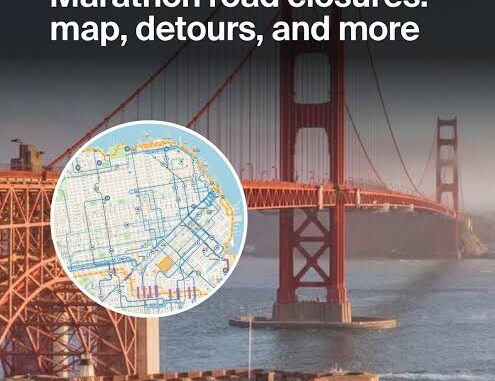
The SF Marathon route is widely regarded as one of the most scenic and challenging marathon courses in the United States. Every year, thousands of runners travel to San Francisco to experience breathtaking waterfront views, the iconic Golden Gate Bridge, rolling hills, and vibrant neighborhoods. The 2026 SF Marathon once again delivered an unforgettable race, attracting more than 33,000 participants across multiple race distances.
Whether you’re planning to run the event next year or simply want to know what makes the course so special, here’s everything you need to know about the SF Marathon route.
SF Marathon Route Overview
The 2026 SF Marathon began at 5:15 a.m. on Embarcadero at Market Street and concluded on Embarcadero at Howard Street, covering the official marathon distance of 26.2 miles. The course features more than 1,300 feet of elevation gain, making it one of America’s more demanding city marathons.
Unlike flatter races such as Chicago or Berlin, the San Francisco Marathon rewards runners with spectacular scenery while testing their endurance on numerous climbs and descents.
Highlights of the SF Marathon Route
One of the biggest reasons runners choose the SF Marathon is its unforgettable course. Major landmarks include:
- Ferry Building start area
- Embarcadero waterfront
- Fisherman’s Wharf
- Marina District
- Presidio
- Golden Gate Bridge crossing
- Golden Gate Park
- Haight-Ashbury
- Mission District
- Finish along the Embarcadero
The route combines famous tourist attractions with local neighborhoods, giving runners a true tour of San Francisco.
Golden Gate Bridge: The Signature Moment
Crossing the Golden Gate Bridge remains the defining feature of the SF Marathon route.
Early morning fog often surrounds the bridge, creating dramatic scenery while runners enjoy panoramic views of San Francisco Bay, Alcatraz, and the Pacific Ocean. For many participants, this section alone makes the race worth traveling for.
How Difficult Is the SF Marathon?
The SF Marathon is not considered a beginner-friendly course because of its significant elevation changes.
Challenges include:
- Continuous rolling hills
- More than 1,300 feet of climbing
- Technical downhill sections
- Cool temperatures with coastal wind
- Early morning race start
Despite the difficulty, many runners consider it among the most rewarding marathon experiences in North America.
Race Day Atmosphere
More than 33,000 runners participated across all race distances in 2026, including:
- Full Marathon
- First Half Marathon
- Second Half Marathon
- 10K
- 5K
- Ultramarathon events
Crowds lined popular viewing areas such as the Embarcadero, Golden Gate Park, and the Mission District, creating a festive atmosphere throughout race morning.
Traffic and Road Closures
Because the SF Marathon route passes through much of San Francisco, extensive road closures are required.
Drivers experienced temporary closures around:
- Embarcadero
- North Beach
- Marina District
- Golden Gate Park
- Mission District
While vehicle traffic continued across the Golden Gate Bridge, pedestrian sidewalks were temporarily restricted during the event. Public transportation routes were also adjusted throughout race weekend.
Training Tips for the SF Marathon
Anyone preparing for the SF Marathon should include hill training as part of their preparation.
Recommended training includes:
- Weekly hill repeats
- Long runs with elevation gain
- Downhill running practice
- Strength training for legs and core
- Running in cool morning conditions
These workouts help runners manage the demanding elevation profile while maintaining energy for the final miles.
Why the SF Marathon Is So Popular
The SF Marathon consistently ranks among America’s most memorable races because it offers:
- One of the world’s most scenic marathon routes
- Historic landmarks
- Challenging terrain
- Cool summer weather
- Unique Golden Gate Bridge crossing
- Outstanding volunteer support
For runners seeking both adventure and accomplishment, the SF Marathon route delivers an experience unlike any other.
Final Thoughts
The SF Marathon route perfectly combines breathtaking scenery with a physically demanding course. From the Ferry Building to the Golden Gate Bridge and back through San Francisco’s iconic neighborhoods, every mile offers a memorable experience. Although the hills make it one of the tougher city marathons in the United States, runners continue returning each year for the challenge, community atmosphere, and unmatched views that define the SF Marathon.