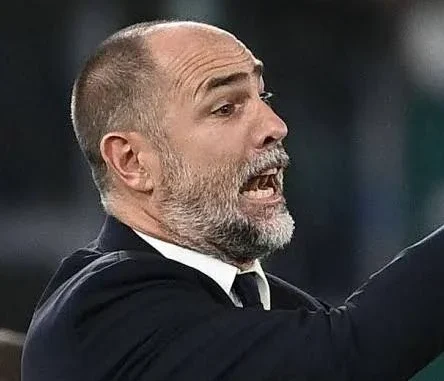
Igor Tudor is a well-known figure in European football — both as a former defender and a manager. His journey has taken him from playing for one of the world’s biggest clubs to managing across multiple countries and leagues. In this article, we’ll explore Tudor’s status at Juventus, the teams he’s coached, his tactical philosophy, and whether he speaks English.
Igor Tudor and Juventus — A Storied Connection
Igor Tudor’s association with Juventus began as a player in 1998 and lasted nearly a decade. As a centre-back, he made more than 170 appearances for the club, contributing both defensively and offensively during a successful period for the Bianconeri.
Years later, Tudor returned to Turin in a coaching capacity. He first served as an assistant coach under Andrea Pirlo in 2020–21, before being appointed head coach in March 2025 following Thiago Motta’s dismissal. Under his stewardship, Juventus initially secured a fourth-place finish and Champions League qualification — a significant achievement given the circumstances.
However, Tudor’s second season was challenging. Juventus struggled and endured an eight-game winless run, ultimately leading to his dismissal in October 2025.
Teams Coached by Igor Tudor
Throughout his managerial career, Tudor has led a variety of clubs in different countries:
Croatia
-
Hajduk Split – Started his managerial career here, winning the Croatian Cup and building his reputation.
Greece
-
PAOK – Short stint in the Greek league.
Turkey
-
Karabükspor
-
Galatasaray – Managed one of Turkey’s biggest clubs.
Italy
-
Udinese – Twice in charge, keeping the club safe from relegation.
-
Hellas Verona – Guided the club to impressive mid-table success.
-
Lazio – Brief spell before returning to Juventus.
France
-
Olympique de Marseille – Achieved a strong league position, showcasing his tactical and man-management skills.
Current (as of 2026)
After his Juventus exit, Tudor took on a temporary managerial role with Tottenham Hotspur in the English Premier League — highlighting his expanding reputation beyond Italy and France.
Does Igor Tudor Speak English?
While there’s no official confirmation of Tudor’s language fluency in public biographies like his Wikipedia profile, Tudor has managed and spoken to the media in several countries where English is commonly used as a football lingua franca (e.g., France, England). This implies that he likely has at least functional English communication skills.
His roles in Ligue 1 and the Premier League — arenas where English is widely spoken — suggest that even if English isn’t his native language, he is capable of managing and communicating at a high level with players and media.
Tactical Philosophy — What Defines Tudor’s Playstyle?
Tudor’s tactical approach is characterized by adaptability and intensity:
Flexible Formations
He commonly uses systems like 3-4-2-1 or 3-5-2, but is not limited to them. Tudor adjusts his formation based on player strengths and match situations.
Aggressive Pressing
Tudor’s teams are known for their intense pressing and direct attacking. Instead of slow, possession-focused play, his sides look to win the ball early and transition quickly forward.
Balanced Defense and Attack
While he emphasizes breaking forward quickly, Tudor also values defensive discipline and organization to prevent conceding goals — a hallmark of his tactical identity.
This blend of pressure, direct play, and tactical flexibility has defined his managerial identity and shaped the teams he’s coached in Serie A, Ligue 1, and beyond.
Final Thoughts
Igor Tudor’s football journey is one of resilience and evolution. From his early days as a commanding defender at Juventus to managing top clubs across Europe, his tactical acumen and drive have defined his career. Despite a challenging stint at Juventus as head coach, his leadership and adaptability have kept him in demand — including a high-profile role in England.
Whether Tudor’s next chapter leads him back to Italy or solidifies his place in England, his story remains a compelling one for football fans and analysts alike.