Introduction
Jeff Kent emerges as one of the most compelling — and controversial — second basemen in modern baseball history. From his prodigious offensive output to debates about his defensive value and Hall-of-Fame credentials, Kent’s story captures the tension between traditional baseball metrics and advanced analytics. As of December 2025, Kent has finally been elected to the National Baseball Hall of Fame and Museum, bringing renewed attention to his legacy.
Early Life & Career Overview (Wiki Background)
-
Jeff Kent was born on March 7, 1968 in Bellflower, California.
-
He made his Major League Baseball debut on April 12, 1992 with the Toronto Blue Jays, and played his final game on September 27, 2008 with the Los Angeles Dodgers.
-
Over a 17-season career, Kent donned jerseys for six teams: Blue Jays, New York Mets, Cleveland Indians, San Francisco Giants, Houston Astros, and Dodgers.
Career Statistics & Achievements
Kent’s career numbers speak volumes, especially when viewed through a traditional statistics lens.
| Stat / Achievement | Value / Detail |
|---|---|
| Games Played | 2,298 |
| Hits | 2,461 |
| Home Runs (HR) | 377 total; 351 as a second baseman — most ever for that position. |
| Runs Batted In (RBI) | 1,518 |
| Batting Average (AVG) | .290 |
| On-base % (OBP) / Slugging % (SLG) / OPS | .356 / .500 / .855 (career) |
| Doubles | 560 |
| Triples | 47 |
| Stolen Bases | 94 |
| MLB Awards & Honors | 5× All-Star, 2000 NL MVP, 4× Silver Slugger |
Notably, Kent’s offensive production from second base — a traditionally defense-first position — set him apart. His combination of power (HR, RBI), contact (hits, AVG), and consistency made him arguably the most productive offensive second baseman of his era.
FanGraphs & Advanced Metrics Analysis
While traditional stats favor Kent, advanced metrics and analytical frameworks offer a more nuanced — sometimes critical — view.
-
According to a recent analysis ahead of the 2026 Hall of Fame vote, Kent’s career WAR stands at 55.4, with a 123 OPS+.
-
Among second basemen with at least 7,000 plate appearances, Kent’s 123 OPS+ ranks only 9th.
-
By WAR and JAWS standards (which weigh longevity, peak performance, and all-around value), Kent trails many Hall-of-Fame second basemen: his WAR is ~14 wins below the average for enshrined second basemen.
-
Defensive metrics also weighed against him. While his bat was elite, Kent was not considered a defensive standout — limiting his overall analytical value, especially compared to peers.
In short: Kent’s case shines brightest when judged by traditional offense-based stats; when judged by comprehensive, era-adjusted metrics, his Hall credentials appear more borderline.
Steroids Debate & Hall of Fame Context
Although Barry Bonds and Roger Clemens — two of Kent’s contemporaries — were denied induction in 2025 despite their superstar credentials, Kent’s election offers a contrast.
-
Kent never tested positive nor was publicly linked to performance-enhancing drug (PED) allegations, distinguishing him from some who shared his era.
-
That clean record likely improved his standing with the voting committee, especially at a time when PED-tainted players continue to be scrutinized heavily.
-
In fact, some analysts argued Kent might be the most logical inductee from the 2026 ballot, given that other leading candidates had PED associations or suspicions.
Nevertheless, advanced-stats critics had long pointed out that Kent’s impressive counting stats came in a high-offense era — calling for caution before enshrining him.
Dodgers Period & Final Years (Legacy at LA)
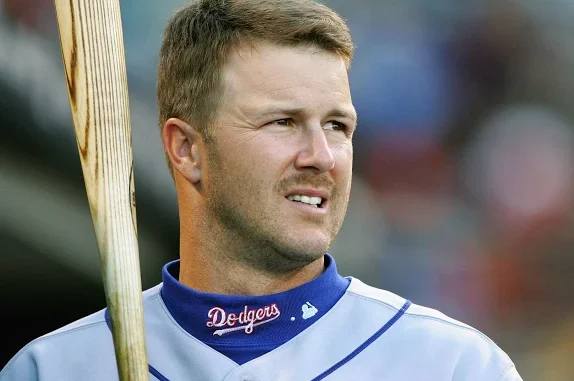
Kent spent the final four seasons (2005–2008) of his career with the Los Angeles Dodgers.
-
During this stint, he remained a productive hitter, even as younger stars such as Matt Kemp, Russell Martin, and Andre Ethier emerged around him.
-
His veteran presence, leadership, and professionalism solidified his status as a respected elder on the clubhouse, even if his defensive range had begun to decline by that stage.
-
While Kent will be enshrined wearing a Giants cap (reflecting the prime of his career), his Dodgers tenure remains a meaningful chapter — emblematic of both perseverance and longevity in the sport.
Hall of Fame Induction in 2026 & Significance
-
On December 8, 2025, the Contemporary Baseball Era Committee elected Jeff Kent to the Hall of Fame, awarding him 14 of 16 possible votes — the only player on that ballot to reach the 75% threshold.
-
Kent becomes the 62nd former Giant (among other franchises he played for) to be inducted.
-
With 377 career homers (351 at second base), 1,518 RBIs, a .290 batting average, and multiple accolades — including the 2000 NL MVP — Kent’s induction validates his sustained offensive dominance at a non-corner position.
-
For many baseball fans and analysts, Kent’s enshrinement is also symbolic: it reflects a re-evaluation of players whose value may have been underappreciated by traditional voters or earlier metrics.
Conclusion
Jeff Kent’s path to the Hall of Fame epitomizes the shifting landscape of baseball evaluation — from venerating raw power and counting stats to weighing analytic measures like WAR, OPS+, and defensive value. While skeptics questioned his value beyond the bat, Kent’s consistent excellence with the bat, clean record in a steroid-tainted era, and sustained performance across 17 seasons ultimately secured his spot in Cooperstown. His election in 2026 closes a longtime chapter while provoking renewed debate about how we define “greatness” at second base and beyond.