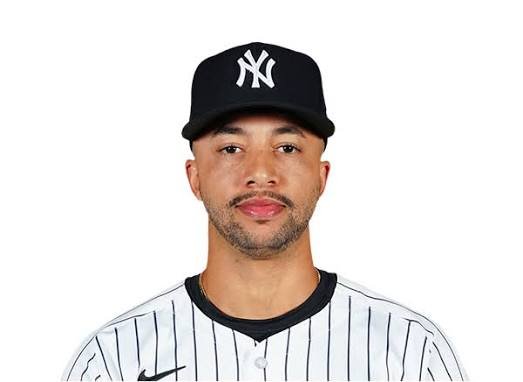
The Free Agency Turn
Devin Williams entered free agency after a turbulent 2025 season with New York Yankees. After being traded from the Milwaukee Brewers last offseason, Williams struggled throughout 2025 — finishing with a career-worst 4.79 ERA in 67 appearances.
Despite high expectations, he managed only 18 saves out of 22 chances and recorded four blown saves. The poor performance and inconsistent closer role led the Yankees to let him hit the open market.
Yet Williams remained in demand. Many evaluators looked beyond surface numbers and considered his underlying metrics — strikeouts, FIP, expected ERA, and stuff — still good enough to suggest a rebound.
Mets Bet Big: A High-Stakes Signing
On December 1, 2025, the Mets reportedly agreed to a three-year deal with Williams, worth around $51 million (some reports cite $45 million, with bonuses and deferrals). This marks a clear signal that New York views Williams as a key piece in their bullpen overhaul.
At 31 years old, Williams will arrive in Queens under familiar leadership: the Mets’ front office includes former Brewers executive David Stearns, who helped develop Williams into an elite reliever.
Whether he will be used as the primary closer or in a setup role remains unclear — partly because the Mets are reportedly still interested in re-signing established closer Edwin Díaz.
The Blown Saves & 2025 Struggles
Williams’ 2025 season with the Yankees was widely considered a disappointment — by far the worst of his career. His 4 blown saves and unstable ninth-inning role drew scrutiny.
More troubling: his 4.79 ERA represented a sharp contrast from the elite form he displayed in prior years with the Brewers, where he posted a career-ERA of 1.83 before the 2025 slump.
Still, looking deeper — using advanced metrics such as FIP (Fielding Independent Pitching) and expected ERA — many analysts judged his poor ERA to be partly the result of bad luck rather than a total loss of form. His 2025 FIP was 2.68, and his expected ERA hovered near 3.04.
Moreover, his signature changeup — the so-called “airbender” — remained effective. Opponents hit just .194 against it and it generated a strong whiff rate (~37.3%). Toward the end of the season, Williams showed signs of resurgence: in his final nine appearances, he did not allow a run, struck out 12 batters, and walked only two over nine innings.
That late-season stretch, plus four scoreless postseason innings, provided a glimmer of hope — and likely helped attract Mets’ interest despite the rough 2025 campaign.
What Fans & Analytics (e.g. FanGraphs) Say — Is a Bounce-Back Realistic?
Analysts at sites like the reader-favorite sabermetrics outlet FanGraphs and other MLB pundits see Williams as a “bounce-back candidate.” Despite the rough 2025 season, his underlying data — strikeout rate, walk rate, hard-hit rate, and pitch effectiveness — suggest that a return to form is plausible.
His history supports that optimism: during six seasons with the Brewers, Williams developed from a setup man into a dominant closer. He was named the National League Rookie of the Year in 2020, and made All-Star teams in 2022 and 2023.
Moreover, reconnecting with David Stearns — under whose watch he thrived in Milwaukee — could help him regain his former dominance: familiarity with front office philosophy, coaching staff, and organizational expectations may provide a stabilizing environment.
Still, there’s a risk: if Williams fails to deliver, his contract becomes a heavy obligation for the Mets — and if the team re-signs Edwin Díaz, Williams may have to settle for a setup role rather than returning as a closer.
Conclusion: A High-Reward, High-Risk Move
The signing of Devin Williams by the Mets is nothing short of a bold bullpen gambit. On one hand, there’s credible evidence — both from advanced metrics and from his past track record — to believe this veteran right-hander can bounce back and reclaim his elite closer status. On the other, his 2025 performance raises legitimate questions about consistency, confidence, and whether the “airbender” still has the same bite.
For the Mets, this move reflects ambition and a willingness to swing for upside. If Williams returns to form, the bullpen could become a strength. If he falters, the move may go down as a gamble that didn’t pay off. Either way — for fans, analysts, and fantasy players — 2026 promises to be a compelling season for Devin Williams.