Introduction
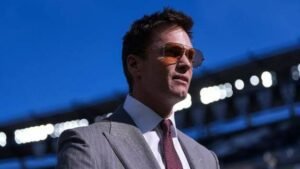
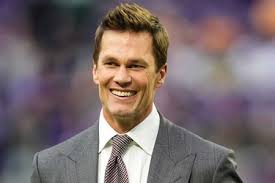
Tom Brady, one of the most recognizable and celebrated figures in NFL history, has once again found himself in the middle of viral controversy. During his role as a FOX commentator for the Dallas Cowboys vs. Philadelphia Eagles game, Brady made a verbal slip that prompted a heated online debate: did he almost utter the N-word? Fans watched, replayed, and argued over the brief moment, and the fallout was immediate.
In this article, we’ll break down exactly what happened, how people interpreted it, what Brady himself said (and apologized for), and what this means in the broader context of sports commentary, race, and live broadcasting.
What Actually Happened: The On-Air Slip
-
The Setting
-
During a crucial moment in the Cowboys vs Eagles game, Brady was analyzing a replay. The play in question involved a sack by Dallas defender Osa Odighizuwa on Eagles quarterback Jalen Hurts.
-
As he described how Odighizuwa “blasted through,” Brady stumbled over his words.
-
-
The Slip
-
Brady said:
“Odighizuwa just blasted through Nicker …”
-
Immediately, he corrected himself:
“Excuse me, Landon Dickerson right there.”
-
It was pointed out that “Landon Dickerson” is the Eagles’ offensive lineman, and Brady mispronounced or got tangled up in his name.
-
-
The Reaction
-
The brief moment went viral on social media. Many users slowed down and amplified the audio, convinced that Brady had said a racial slur.
-
Some insisted: “Sounds like Tom Brady said the infamous ‘N’ word.”
-
Others defended Brady, arguing it was a simple verbal slip: “He said ‘nicker’ … like Nickerson.”
-
On platforms like X (formerly Twitter), users debated intensely, replaying the clip over and over.
-
Why the Controversy Is So Sensitive
-
The N-word is one of the most historically charged and offensive words in the English language. Even a perceived misuse of it by a prominent public figure can provoke outrage, especially in a racially sensitive environment like sports broadcasting.
-
Brady is not just any commentator—he’s a legendary NFL player, and his words carry weight. A slip like this is amplified by his status.
-
Live sports commentary is fast, and mistakes are common: broadcasters often have to identify players, call plays, and speak in real time.
-
But this wasn’t just a minor mistake: the particular syllable he stumbled on (“Nicker-”) resonated with a historically charged slur, which is why it spread so rapidly on social media.
Brady’s Response
-
According to reports, Brady immediately apologized on air. He said “pardon me” after correcting himself.
-
This apology signaled that he recognized the gravity of the verbal misstep—or at least was aware of how it might be perceived.
-
There is no indication (so far) that Brady used the N-word intentionally. Multiple observers and media outlets conclude it was a verbal stumble, not a deliberate slur.
-
Some broadcasting professionals have defended him, noting that tongue-tied moments are “common” in live commentary.
Historical Context & Past Allegations
-
This isn’t the first time rumors have swirled around Brady and accusations of slur usage. During his feud with Tyrann Mathieu (then of the Kansas City Chiefs, during Super Bowl LV), there were claims that Brady used a slur.
-
However, Michael Irvin (a former player and NFL Network analyst) publicly defended Brady, stating that he did not hear any racial slur in that incident.
-
According to Irvin, after listening to the mic’d-up audio from the game, he insisted: “Tom did not” say the N-word.
-
That context is important because it frames this recent episode not as a new pattern but rather another live commentary blunder.
Why This Sparked So Much Debate
-
Amplification via Social Media
-
Within minutes of the broadcast, the clip was shared on platforms like X, TikTok, and Reddit.
-
Users slowed it down, looped it, and argued over whether he said the slur or simply mispronounced.
-
-
Status of Tom Brady
-
As a high-profile commentator and former NFL superstar, any controversy involving Brady draws disproportionate attention.
-
His legacy on the field means that his off-field (or booth) mistakes are viewed through a more scrutinizing lens.
-
-
Race Sensitivity in Sports
-
Issues of race and language are particularly sensitive in American football, where many players, coaches, and commentators belong to diverse racial and ethnic backgrounds.
-
A momentary slip that sounds like a racial slur is not just a broadcasting mistake—it can be seen as a racial issue, whether or not that was the intent.
-
-
Live TV Pressure
-
Bracketed by fast commentary, real-time play calling, and high stakes, live sports broadcasts are inherently prone to verbal mistakes.
-
Even veteran broadcasters slip up — but when the misstep is potentially offensive, the consequences are magnified.
-
Expert & Public Commentary
-
Some media outlets and sports analysts have explicitly defended Brady, calling the incident a mispronunciation, not a slur.
-
Others are more cautious, saying that regardless of intent, the slip was “unfortunate” and merits reflection on language sensitivity in broadcasting.
-
On social media:
“He said ‘Nicker-’ as in Nickerson … just got tongue-tied.” — a user defending Brady
-
On the flip side, some voices are demanding accountability, asking whether broadcasters (especially high-profile ones) should have higher precision and cultural awareness when speaking.
Broader Implications for Sports Commentary
This incident is more than just a viral moment — it raises larger questions about:
-
Responsibility of Commentators
-
Should commentators be trained or more cautious to avoid phrases that can be misheard as offensive?
-
Is there a need for sensitivity training or ‘on-the-job auditing’ for high-stakes live broadcasters?
-
-
Role of Social Media in Accountability
-
How does the speed and scale of social media shape the way we interpret verbal mistakes?
-
Do viral moments create necessary scrutiny, or do they risk mischaracterizing unintentional errors?
-
-
Race and Language in Public Discourse
-
Even accidental slips can stoke tensions about race, especially in an environment (like the NFL) where race is often part of broader conversations.
-
Does this incident reflect a larger cultural shift, where every word is parsed meticulously for possible offense? Or is it just another case of live TV gone wrong?
-
What Can Be Learned
-
For Commentators / Broadcasters:
-
Even the most experienced broadcasters can stumble. What matters is how they respond — Brady apologizing immediately was important.
-
Doing a quick self-check, especially when uttering names that are unfamiliar or tricky, can help prevent such slips.
-
-
For Audiences:
-
While vigilance is crucial, it’s also important to recognize that not every verbal mistake is a malicious act.
-
A balanced approach — calling out genuinely problematic language while allowing for human error — may be more constructive.
-
-
For Media & Platforms:
-
Viral clips can spark necessary debate, but media should also strive to provide context before drawing definitive conclusions.
-
Platforms should encourage thoughtful discussion, not just outrage — acknowledging nuance in sensitive cases like this. Tom Brady.
-
FAQs
Q1: Did Tom Brady really say the N-word?
A1: According to multiple credible sources, including media outlets and on-air commentary, Brady did not intentionally use the N-word. He stumbled over the name “Landon Dickerson,” saying “Nicker …” before correcting himself.
Q2: What was Brady apologizing for?
A2: Brady apologized on air almost immediately after the slip, saying “pardon me.” He acknowledged it was a mistake made in the heat of live commentary, not a deliberate offensive remark.
Q3: Why did people think he said a slur?
A3: The syllable “Nicker-” sounded very close to the N-word to many viewers. Given the short duration of the slip, the similarity, and the power of social media for replaying and analyzing audio, lots of people interpreted it as a racial slur.
Q4: Has Brady ever been accused of using racial slurs before?
A4: Yes, there was a past incident involving Tyrann Mathieu after Super Bowl LV where Mathieu implied Brady said something offensive. But Michael Irvin, after reviewing the audio, said he did not hear a racial slur.
Q5: Does this mean broadcasters should be more careful with how they speak?
A5: Many analysts say yes — live commentary is fast and high-pressure, but precision and sensitivity are important, especially with names that might be misheard as problematic. This incident underscores the need for awareness, training, and perhaps more deliberate pacing in certain moments. Tom Brady.
Conclusion
Tom Brady’s verbal slip during the Eagles vs. Cowboys game became an instant social media phenomenon, not because what he said was offensive by design, but because of how it sounded, how people heard it, and the power of replay. While live commentary is inherently risky — especially for someone speaking at the speed of a pro — this episode highlights the importance of clarity, humility, and accountability in broadcasting.
Brady’s quick correction and apology may have helped defuse the moment, but the debate it triggered won’t fade soon. In an era where every word is scrutinized, this incident serves as a reminder: even legends can trip, and in doing so, can spark crucial conversations about language, race, and responsibility.