Introduction
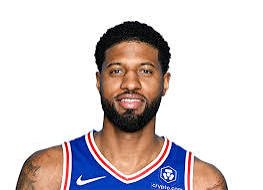
Paul Clifton Anthony George, widely known as Paul George, is one of the most versatile and accomplished players in the NBA. Nicknamed “PG-13,” George has built a reputation as a two-way star, excelling on both offense and defense. Over his long career spanning multiple teams, he has become a perennial All-Star and one of the most respected wings in basketball. In this article, we explore his jersey, height, college journey, injury history, contract details, and statistical milestones.
1. Jersey Numbers: What Number Does Paul George Wear?
Paul George’s jersey numbers have varied throughout his career, reflecting different phases and teams:
-
Indiana Pacers / Early NBA: He wore #24, which became closely associated with his early rise.
-
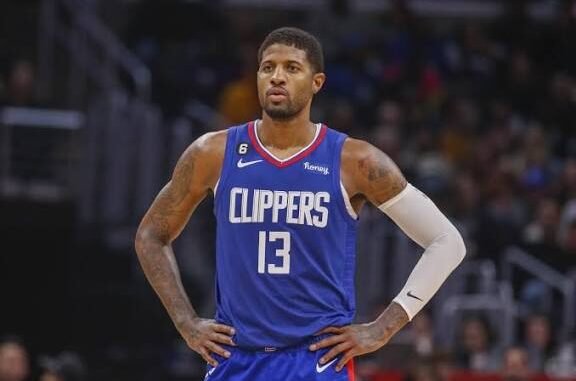
Los Angeles Clippers: He switched to #13 when he played for the Clippers.
-
Philadelphia 76ers (2024–present): After signing with the 76ers, George chose #8 as his jersey number.
-
This was a meaningful choice: both his former numbers (24 and 13) are retired by the 76ers franchise, so he opted for 8 in tribute to Kobe Bryant, a Philadelphia native.
-
-
College (Fresno State): During his two years in college at Fresno State, George also wore #24.
2. Height (and Physical Profile)
One of George’s most striking physical attributes is his size and length, contributing to his two-way impact:
-
His height is 6 feet 8 inches (2.03 m), per his NBA profile.
-
His weight during his NBA career: around 220 lb (≈ 100 kg).
-
With such a frame, George is able to guard multiple positions, shoot over smaller defenders, and use his wingspan advantage on defense.
3. College Career: Where Did Paul George Play?
Paul George played college basketball at California State University, Fresno (commonly called Fresno State Bulldogs).
Here are some highlights from his college career:
-
He played two seasons at Fresno State.
-
In his first season, he made an immediate impact. In one of his early games, he scored 14 points against Sacramento State.
-
In his second season, he averaged very solid numbers: 16.8 points, 7.2 rebounds, 3.0 assists, and 2.2 steals per game.
-
He was named to the All-WAC Second Team during his college years.
-
His college jersey number 24 was later retired by Fresno State, highlighting how important he was during his tenure.
4. Injury History: Major and Notable Setbacks
Paul George’s career has seen both highs and serious lows, especially in the form of injuries. Understanding his injury history is critical to understanding his resilience and longevity.
4.1 The 2014 Leg Injury
-
In August 2014, George suffered a gruesome open fracture of his right leg (tibia and fibula) during a Team USA intrasquad scrimmage.
-
The injury happened when George attempted to block a James Harden layup; on landing, his leg hit the base of the basket stanchion and “crumpled.”
-
He underwent immediate surgery and remained hospitalized for several days.
-
It was initially feared he might miss the entire 2014–15 season.
-
He made a remarkable return on April 5, 2015, playing limited minutes against the Miami Heat.
4.2 Other Injuries Throughout His Career
Beyond the leg fracture, George has had other significant injuries and health setbacks:
-
Shoulder issues: He has undergone shoulder surgeries in his career, affecting his play at times.
-
2024–25 season (with Philadelphia 76ers):
-
George hyperextended his left knee during preseason.
-
He also suffered injuries to his left adductor and underwent treatments (injections) that ruled him out for the rest of the season.
-
Subsequently, he had arthroscopic surgery on his left knee in July 2025 to address ongoing issues.
-
-
His injury history reflects not just major traumatic injuries but also the wear and tear of a long NBA career, especially for a star wing who plays heavy minutes.
5. Contract Details: How Much Is Paul George Earning?
Paul George’s contract situation has evolved over his career. Some key points:
-
In July 2024, he signed a 4-year, $212 million maximum contract with the Philadelphia 76ers.
-
The deal reportedly includes a player option for the final season (2027–28).
-
The move to the 76ers reunited him with ambitious front office goals, pairing him with Joel Embiid and Tyrese Maxey in a star trio.
-
However, his first season under this contract was marred by injuries, and his performance dipped compared to his peak years.
6. Career Stats & Performance
Paul George has had a prolific NBA career. Below is an overview of his stats, accomplishments, and playing style.
6.1 Basic Career Stats
-
According to his NBA.com profile, George’s height is 6′8″, weight ~220 lb.
-
In the 2024–25 season with the 76ers, he averaged:
-
16.2 points per game (PPG)
-
5.3 rebounds per game (RPG)
-
4.3 assists per game (APG)
-
-
Over his entire career (across multiple teams: Pacers, Thunder, Clippers, 76ers), he has averaged:
-
~20.6 points per game,
-
~6.3 rebounds, and
-
~3.7 assists (based on aggregated career stats).
-
6.2 Style of Play & Impact
-
Two-way star: George is known for his scoring ability, his perimeter shooting, and his defensive versatility.
-
Playmaking: Over his career, he has developed into a capable secondary playmaker, not just a pure scorer.
-
Clutch and veteran presence: As he has matured, George has become a leader on his teams, both on and off the court.
6.3 Accolades & Achievements
Some of his notable achievements include:
-
Multiple All-Star selections
-
All-NBA honors, including first team and third team
-
All-Defensive team selections
-
NBA Most Improved Player (earlier in his career)
-
Resilience: A successful comeback from a very serious injury (2014) to remain among the top players in the league.
7. Legacy & Significance
Paul George’s legacy in the NBA is cemented by a combination of talent, perseverance, and adaptability.
-
Resilience in the face of adversity: His comeback from the 2014 leg fracture is often cited as one of the most inspiring in NBA history.
-
Versatility: He has adapted his game over time — from a high-flying young wing to a more mature, all-around star.
-
Mentorship and leadership: As he plays in his mid-30s, George brings veteran leadership to teams like the 76ers, helping younger stars and stabilizing the roster.
-
Two-way excellence: Few players at his position can match his ability to score, defend, and contribute across the board.
FAQs (Frequently Asked Questions)
Q1: What is Paul George’s current jersey number?
A1: Paul George wears #8 for the Philadelphia 76ers (as of the 2024–25 season).
Q2: How tall is Paul George?
A2: He is 6 feet 8 inches (2.03 m) tall.
Q3: Which college did Paul George attend?
A3: He attended Fresno State (California State University, Fresno) and played for the Fresno State Bulldogs.
Q4: What major injuries has Paul George suffered?
A4: His most serious injury was an open tibia-fibula fracture in his right leg during a Team USA scrimmage in August 2014.
He has also had shoulder surgeries, knee issues, and more recently (2024–25) injuries to his left knee and adductor.
Q5: What is the value of Paul George’s contract?
A5: He signed a 4-year, $212 million max contract with the Philadelphia 76ers in July 2024.
Q6: What are Paul George’s career statistics?
A6: Over his career, George averages around 20.6 PPG, 6.3 RPG, and 3.7 APG (across multiple teams).
In the 2024–25 season, he averaged 16.2 pts, 5.3 rebounds, and 4.3 assists for the 76ers.
Q7: Why is Paul George called “PG-13”?
A7: The nickname “PG-13” is a play on his initials (“P.G.” for Paul George) and his jersey number during the Clippers, plus a nod to the movie rating — symbolizing that he’s edgy but not “restricted.”
Q8: Has Paul George’s college number been honored?
A8: Yes, Fresno State retired his college jersey number 24, recognizing his impact during his two seasons there.
Conclusion
Paul George’s journey—from his early college days at Fresno State to becoming an NBA star, enduring devastating injuries, and yet consistently returning to high-level play—epitomizes resilience and excellence. His jersey history reflects his evolution; his height and physical profile underlie his two-way game; his college career laid the foundation; his major injuries highlight his grit; his contract underscores his value; and his career stats validate his legacy. For fans and aspiring players alike, George remains a powerful example of what dedication and adaptability can achieve in the world of professional basketball.