Introduction
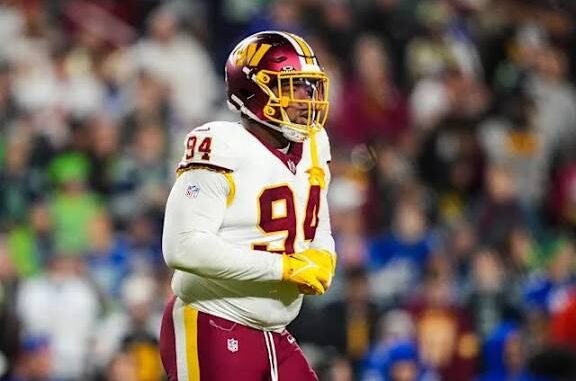
Daron Payne is a name that evokes both high expectations and recent controversy. The interior defensive lineman for the Washington Commanders has had a stellar college career, a lucrative contract in the NFL, and now finds himself at the centre of an ejection incident. This article dives into all the facets: the ejection, its implications, his contract details, and how his college days at Alabama Crimson Tide shaped his professional journey.
The Ejection Incident
In a Week 10 matchup versus the Detroit Lions, the Commanders’ defensive tackle Daron Payne was ejected after throwing a punch at wide-receiver Amon‑Ra St. Brown. The sequence went as follows:
-
After Detroit scored its third touchdown in the first half, St. Brown walked by Payne and reportedly said something. Payne then delivered a right cross aimed at St. Brown’s chin/neck area.
-
The officials flagged Payne for unsportsmanlike conduct and ejected him automatically.
-
On Monday, the NFL announced a one-game suspension without pay for Payne due to the violation of rules prohibiting striking an opponent in the head or neck region.
Why this matters:
-
It was the first ejection of Payne’s career.
-
The timing and nature of the incident raised questions about discipline and leadership within the Commanders’ defensive unit.
-
The ejection allowed Detroit to capitalize — they converted a two-point conversion immediately after the incident, turning momentum further in their favour.
Implications:
-
Beyond the immediate ejection and suspension, Payne will forfeit his paycheck for the one game. Media reports estimate around US$1.15 million in lost pay if the suspension holds.
-
The incident also casts a shadow over his contract value and his perceived reliability as a leader on defense.
-
For the team, losing a key interior lineman mid-season in a struggling campaign adds to the challenge.
Contract Details
Daron Payne’s financial and contractual status is significant. Here’s a breakdown:
-
In March 2023, Payne signed a 4-year, US$90 million extension with the Commanders.
-
The deal includes approximately US$60 million in guarantees, with a signing bonus of about US$28 million.
-
The average annual value is roughly US$22.5 million.
What this means:
-
Payne is among the highest-paid defensive tackles in the league (excluding the likes of Aaron Donald).
-
Given this investment, teams expect high performance, discipline, and leadership from him.
-
The ejection and subsequent suspension could impact his standing with the team and in the public eye, potentially influencing future contract negotiations, endorsement opportunities, and his leadership role.
College Career – Alabama Crimson Tide
Before the NFL, Daron Payne developed at the University of Alabama with the Crimson Tide, a program known for producing elite defensive linemen. Key points:
-
He played from 2015 to 2017 at Alabama.
-
As a junior in 2017, he was named the defensive MVP of both the Sugar Bowl and the College Football Playoff National Championship Game.
-
In his 2017 season he recorded 53 tackles (majority against the run), one sack, eight QB hurries, and even caught a one-yard offensive touchdown in the goal-line package.
Why college background matters:
-
Alabama’s program is elite, meaning Payne came from a strong developmental environment, which is often cited when assessing his potential and value.
-
His ability to perform in big games (playoff environment) boosted his draft stock and justified the high expectations in the NFL.
-
The transition from college dominance to professional success is not automatic — the gap between his college pedigree and recent challenges (e.g., ejection) is part of the story.
Putting It All Together
Daron Payne is at a pivotal moment:
-
On one hand, his contract signals the team’s faith and his elite potential.
-
On the other hand, the ejection raises concerns about discipline and impact.
-
His college foundation remains strong, underscoring that the tools and pedigree are there.
-
The key question: Will he refocus, maintain professionalism, and justify the investment — both in performance and leadership?
For the Commanders, retaining their high-paid interior lineman means they need stability — both on and off the field. For Payne, the way he responds to this incident may define his next phase: whether he remains a franchise cornerstone or faces scrutiny and pressure moving forward.
Conclusion
In summary, this incident involving Daron Payne’s ejection is much more than a momentary lapse. It intersects with his high-stakes contract and the promise of his college career. How he moves ahead — returning from suspension, interacting with teammates, and performing on the field — will determine the narrative: whether he fulfills his potential or becomes a cautionary tale of talent overshadowed by discipline.