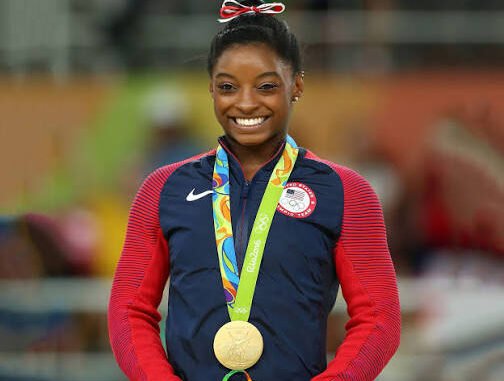
Simone Biles: Response to Charlie Kirk | What Charlie Kirk Said About Her
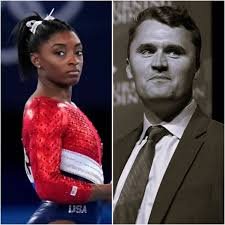
Simone Biles is one of the most decorated gymnasts in history. Alongside her athletic achievements, she has become a prominent figure in conversations about mental health, strength, and the pressures elite athletes face. In 2021, a public debate erupted after Simone Biles withdrew from several events during the Tokyo Olympics due to what she later described as the “twisties” — a dangerous mental block that can affect gymnasts’ spatial awareness. Among those who criticized her was conservative activist Charlie Kirk. Since then, more recent events have added twists: false claims and misinformation about Biles allegedly mocking Charlie Kirk after his death have spread online. This article unpacks:
-
What Charlie Kirk said about Simone Biles
-
The context and fallout of those comments
-
The misinformation that arose later
-
What Simone Biles has actually done — or not done — in response
-
Broader themes: mental health, media, and the benefits of cautious consumption
1. Who is Charlie Kirk & What Was His Comment
Charlie Kirk is a U.S. conservative activist and the founder of Turning Point USA. He often comments on political and cultural issues, including those intersecting with sports and social issues.
His remarks about Simone Biles date principally to mid-2021, during the Tokyo Olympics. After Biles withdrew from the women’s team final, citing mental health concerns (the twisties), Charlie Kirk went on record, calling her a “shame to the country,” “immature,” and even a “selfish sociopath.” He said that she was letting down her teammates and criticized her decision as part of a broader cultural issue, arguing the U.S. is “raising a generation of weak people like Simone Biles.”
His full set of comments included:
-
That she showed weakness in not continuing
-
That by withdrawing, she helped Russia win (i.e. letting “another country” take advantage of her withdrawal)
-
That the mental health reasons were not enough to excuse a gold-medal chances being lost
These comments provoked widespread criticism of Kirk from sports fans, mental health advocates, and many others who argued that prioritizing athlete wellness is not only valid but necessary.
2. Simone Biles’ Position & Reaction to the Tokyo Situation
Simone Biles did not stay silent. Though not always in direct public confrontation with Kirk, her actions and statements have indicated her priorities:
-
She emphasized mental health as real and serious, especially when under global competitive pressure.
-
She described the twisties as a dangerous phenomenon for gymnasts — risking serious injury.
-
She took a position that being able to say “I can’t compete safely or mentally stable right now” is itself strength.
-
Many past statements, interviews, and public support (by athletes, institutions) underscored that mental health is not a weakness.
While she did withdraw from some events in 2021, she returned to competition later, showing resilience, and pursuing her career forward. Many interpreted her example as redefining what “strength” means in high-performance sport. (Note: She did not respond publicly to Charlie Kirk with a direct confrontation in some media; she’s focused largely on her sport, her recovery, and her voice when she chooses to use it.)
3. Misinformation: The Viral False Claim
Fast forward to September 2025: online posts began circulating claiming that Simone Biles wrote a blog post mocking Charlie Kirk after his death. These posts suggested she had been waiting “years to have the final word,” referencing Kirk having called her a “national disgrace” in 2021, and saying that she finally responded with a raw, emotional post following his death.
Key facts about this claim:
-
The claim is completely false. Biles did not write any such blog post.
-
There is no credible source, no link, no media outlet confirming such a blog.
-
The posts appear to be AI-generated or fabricated, combining elements of past real statements and this false present claim to make it seem plausible.
-
News outlets like Hindustan Times, Economic Times, Times of India have debunked the claim.
So, though the feud or controversy had real elements (Kirk’s comments, Biles’ withdrawal, real debates about mental health), the specific claim of Biles mocking Kirk after his death via a blog post is misinformation.
4. Why the False Claim Spread & Its Effects
To understand how such a false claim spreads and gains traction, it helps to look at several dynamics:
-
Existing Tension: Because there was a real controversy in 2021, people know about the conflict between Biles and Kirk. That gives a foundation for belief — “if he said harsh things, maybe she did respond.” Misinformation often works by combining something real with something false.
-
Emotion & Outrage: Topics like mental health, national pride, celebrity, politics — they stir strong emotions. Posts that evoke indignation, unfairness, or moral wrong tend to be shared more widely. The misinformation post was structured to provoke, with phrases like “she waited years to have the final word,” etc.
-
Social Media Mechanics: Facebook/Meta platforms are particularly vulnerable to rapid spreading of short, shocking claims. Screenshots, AI-generated text, posts without verifiable links, etc., proliferate. Fact-checking lags behind virality.
-
Confirmation Bias: People who already feel that Simone Biles was unfairly criticized by conservative figures may be more predisposed to believe a narrative where she finally “gets back” at her critics. So the claim aligns with existing beliefs, making it more shareable.
Effects include:
-
Reputation damage or at least confusion around Biles, as people might believe she attacked someone after his death.
-
Distrust in media and social media: when fake posts spread, it becomes harder for people to know what is real.
-
Potential emotional impact on Biles, and on her fans, as well as critics, because false claims about sensitive topics like death are serious.
5. What Simone Biles Actually Did (or Didn’t Do) in Response
-
Simone Biles has not made a public blog post or statement mocking Charlie Kirk following his death.
-
There has been no credible media outlet that reported such a blog. Fact-checkers have not found anything of substance to support the claim.
-
Her public responses historically have been more nuanced: highlighting mental health, her own well-being, her performances, and responding to situations when she chooses to, but not necessarily engaging in public feuds in the way misinformation claims.
Thus, while she has had direct or indirect responses (through interviews, public statements) about issues of criticism, mental health, and athlete welfare, the specific alleged act (mocking via blog post after Kirk’s death) is false.
6. Broader Themes: Mental Health, Athlete Welfare, Misinformation
The Simone Biles / Charlie Kirk incident highlights several broader issues that are important in modern media, sports, and culture.
Mental Health & Athletic Expectations
Elite athletes are under immense pressure — from media, sponsors, fans, national expectations. The Tokyo incident with Biles helped spark conversations around:
-
The importance of acknowledging psychological stress
-
That mental health issues (twisties, anxiety, etc.) are real, and sometimes competing while impaired can risk injury or worse
-
That withdrawing from competition for mental well-being should not be stigmatized or derided
Media, Misinformation & Social Media Accountability
-
The power of social media to amplify false or exaggerated stories
-
How AI-generated content or fabricated posts can appear credible if mixed with real past events
-
The responsibility of platforms, fact-checkers, and media consumers to verify, be skeptical, check original sources
Public Criticism vs. Compassion
-
Figures like Charlie Kirk may frame criticism around “responsibility,” “national pride,” “winning,” etc. Sometimes those criticisms ignore the human cost or context
-
Athlete welfare sometimes gets sidelined when public discourse focuses on winning or perception
7. Lessons & What Can Be Done
From this incident, several lessons emerge, both for Simone Biles (and public figures) and for those of us consuming media.
-
For Public Figures / Athletes:
-
Being clear in communication helps. If false claims arise, responding or clarifying can help (if one chooses to).
-
Prioritize well-being (physical, mental).
-
Engage with critics thoughtfully — sometimes silence can be misinterpreted, but responses can also increase exposure.
-
-
For Media & Platforms:
-
Fact-checking needs to keep up; platforms should flag or remove false content.
-
Users should be given tools or prompts to verify viral claims.
-
-
For Audiences:
-
Check credible sources (news outlets, official statements) before believing or sharing sensational claims.
-
Examine whether posts provide verifiable proof (links, dates, original statements).
-
Be aware of confirmation bias.
-
8. Summary: Where Things Stand Now
-
Charlie Kirk made harsh criticisms of Simone Biles in 2021 after her withdrawal from events during the Olympics, calling her immature, selfish, a “shame to the country,” etc.
-
Simone Biles has emphasized mental health and safety over competing at any cost. She has not made the blog post or mocking statement about Kirk after his death as claimed in viral posts.
-
The viral claim about Biles responding with a blog post is false, a mix of real past tensions and misinformation.
FAQs
Q1. Did Simone Biles write a blog mocking Charlie Kirk after his death?
A1. No. There is no credible evidence that Simone Biles wrote any blog post mocking Charlie Kirk following his death. Media outlets and fact-checkers have debunked that claim.
Q2. What exactly did Charlie Kirk say about Simone Biles in 2021?
A2. After Biles withdrew from some gymnastics events at the Tokyo Olympics due to mental health concerns (the twisties), Charlie Kirk called her “immature,” a “shame to the country,” and even a “selfish sociopath.” He criticized her decision as part of what he presented as a decline in resilience and strength in younger generations.
Q3. What are the “twisties” that Simone Biles mentioned?
A3. “Twisties” is a gymnastics term used when a gymnast temporarily loses air awareness — i.e. their sense of where they are in space during aerial moves. This can be dangerous. Biles said she was experiencing twisties during Tokyo 2021, which contributed to her withdrawing from certain events.
Q4. Why did the false claim about the blog post spread?
A4. Several reasons: prior conflict between Biles and Kirk gave belief some foundation; sensationalism and outrage make for clickbait; social media stretched the story (often without proof); and AI or fabricated content added plausibility with little verification.
Q5. How should one verify whether such claims (blog posts, quotes, etc.) are real?
A5. Some steps:
-
Check reputable news outlets & fact-checking sites;
-
Look for direct quotes or links;
-
See whether Biles’ verified channels (Instagram, Twitter/X, interviews) made any such statement;
-
Compare timing: is the claim aligned with known dates? If someone said “after his death,” does the blog or post date correspond?
-
Be cautious of posts that mix real events with sensational statements without sourcing.
Conclusion
The story of Simone Biles and Charlie Kirk is more than just a clash of words; it is about the intersection of mental health, public expectation, responsibility, and misinformation in the digital age. While Charlie Kirk’s criticism of Biles in 2021 incited debate, the more recent claim that Biles responded with a mocking blog post after his death is false. Recognizing what is real, what is sensational, and what is entirely fabricated is crucial.
Simone Biles continues to be a symbol not only of athletic excellence but also of resilience, vulnerability, and authenticity. Her career and her public persona remind us that saying “I need help,” or “I cannot do this right now,” can itself be a form of strength—something that criticism often overlooks.